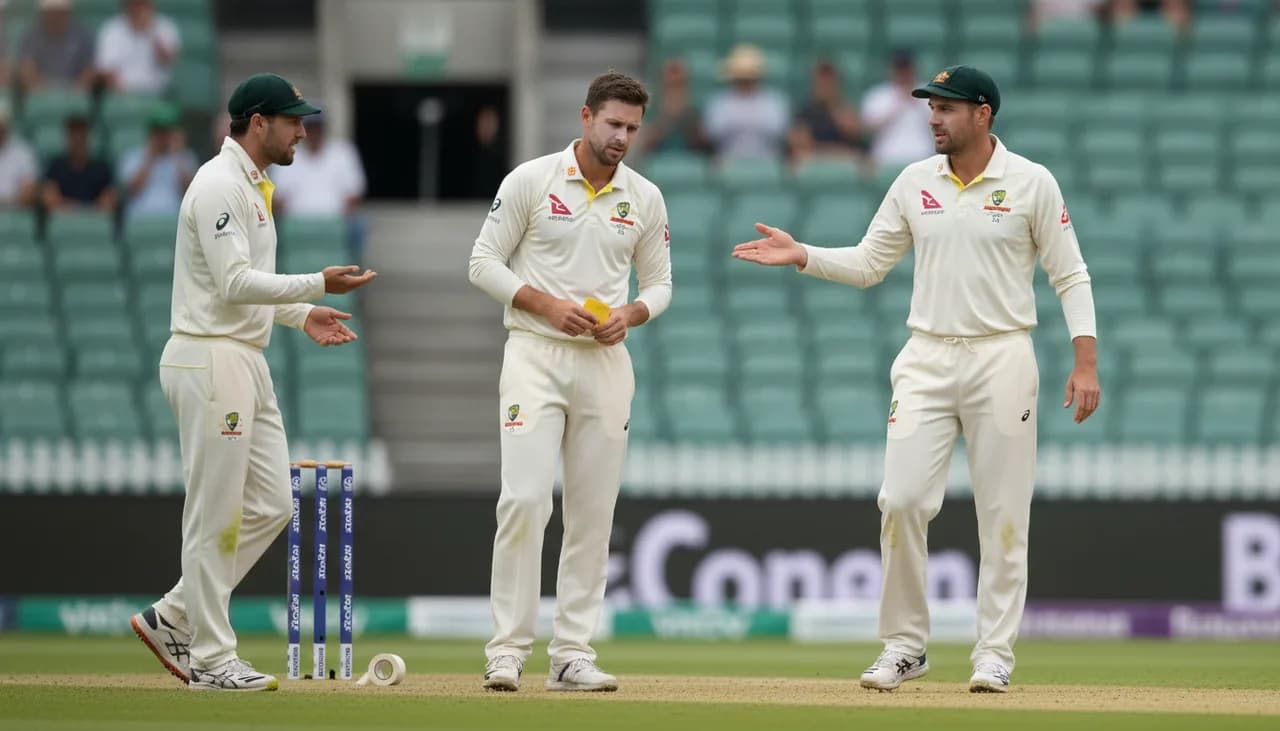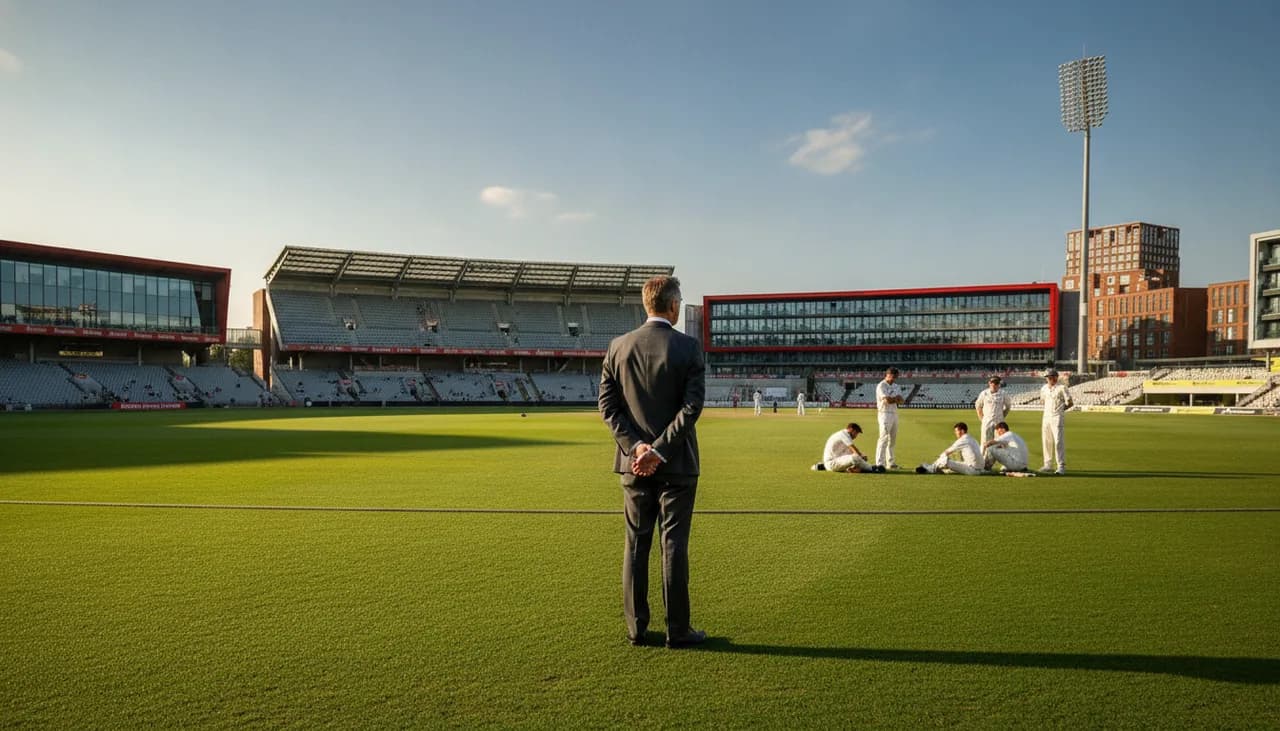
ADELAIDE — The Adelaide Oval, a venue synonymous with Australian cricket dominance, bore witness to a scene of profound shock on the second morning of the second Ashes Test. For the first time in over a decade on home soil, the iconic green baggy cap of Nathan Lyon was absent from the playing eleven, a sight that left the champion off-spinner himself feeling, in his own words, "absolutely filthy."
Lyon's omission, coupled with the continued absence of captain Pat Cummins due to a quadriceps strain, sent seismic waves through the cricketing world. The decision marked the end of a staggering run of 79 consecutive home Test matches for Lyon, a streak that began in November 2012. The selection panel, led by interim captain Steve Smith, opted for a four-pronged pace attack, bringing in Scott Boland and leaving Lyon as the 12th man.
The End of an Era and a Gut-Wrenching Call
The rationale, as explained by coach Andrew McDonald, was rooted in the conditions and recent history. The Adelaide pitch, traditionally a haven for spin on days four and five, had shown more life for seamers in the lead-up. Furthermore, England's aggressive 'Bazball' approach in the first Test at the Gabba had put Australia's bowlers under immense pressure, prompting a tactical shift towards relentless pace. McDonald stated the decision was "based around the conditions and the opposition... it's not a decision we've taken lightly."
For Lyon, however, the logic provided little solace. At 35 years old and with 460 Test wickets to his name—the most by any Australian off-spinner in history—being told he was not in the best XI for a home Ashes Test was a bitter pill to swallow. He described the moment he was informed, saying, "I was absolutely devastated. It's not a nice feeling, to be honest."
A Pillar of Consistency Suddenly Unmoored
Nathan Lyon's career has been built on relentless consistency and durability. Since his debut in 2011, he had become as much a fixture in the Australian Test side as the stumps themselves. His absence highlighted not just a tactical change, but the breaking of a foundational pillar. Key aspects of his unparalleled home record include:
- 79 Consecutive Home Tests: A streak spanning over a decade, from 2012 to 2023.
- Wickets on Every Continent: A testament to his skill in all conditions.
- The Primary Spin Attacker: He had shouldered the spin burden almost single-handedly for a generation.
- Fourth-Highest Wicket-Taker for Australia: Sitting behind only Warne, McGrath, and Lillee.
The decision underscored a harsh reality in modern professional sport: even the most entrenched players are subject to the volatile calculus of conditions, match-ups, and form. Former Australian captain Ricky Ponting voiced the sentiment of many, calling the move "a huge shock," and questioning the message it sent to a proven match-winner.
Cummins' Absence and Smith's Leadership
Compounding the unusual team dynamic was the physical absence of Pat Cummins. The captain was ruled out after failing to overcome a quad strain sustained in the first Test, with Josh Hazlewood named as his bowling replacement. This placed Steve Smith back at the helm for the first time since the 2018 sandpaper scandal, leading a side missing two of its most senior and influential figures.
Smith acknowledged the strangeness of the situation, admitting, "It's obviously a bit different not having Pat out there and not having Gaz (Lyon)... but we've got a good group and we're ready to go." His leadership, and the team's ability to adapt to the dual loss of its captain and premier spinner, became an immediate subplot of the Test.
Tactical Gamble or Necessary Evolution?
The selection gamble was clear. Australia was banking on its pace quartet—Mitchell Starc, Josh Hazlewood, Scott Boland, and all-rounder Cameron Green—to exploit the conditions and dismantle England's batting line-up across four innings. The risks were equally evident:
- Overworking the Pacers: A four-day Test in hot conditions is a grueling ask for a pace-only attack.
- Lacking a Contain Option: Lyon's role in building pressure and offering control from one end was now vacant.
- Fourth-Innings Pressure: If the game went deep, a worn pitch without a specialist spinner could become a major disadvantage.
England's captain, Ben Stokes, noted the surprise, suggesting it showed Australia were "reacting to what happened at the Gabba." The move was interpreted by some as a defensive, rather than assertive, selection.
Lyon's Response and the Road Ahead
Despite his raw emotion, Lyon handled the setback with characteristic professionalism. He was seen actively supporting the team, carrying drinks and offering advice to the bowlers throughout the day. His public comments, while honest about his disappointment, were devoid of bitterness towards the selectors or his teammates. "I'm not going to lie, I'm hurting," he said. "But I'll do my best for the team and be ready if called upon."
This attitude points to a critical chapter in Lyon's career. At 35, questions about succession planning were inevitable, but being dropped accelerates that conversation. The immediate challenge for the selectors will be managing the morale of a champion player while also navigating the tactical demands of a tightly contested Ashes series.
Conclusion: A Watershed Moment in Australian Cricket
The second Ashes Test in Adelaide will be remembered not just for the action on the field, but for the historic selection call that preceded it. The omission of Nathan Lyon was more than a tactical tweak; it was a watershed moment that broke one of the most remarkable streaks of durability in modern sport. It highlighted the ruthless, data-driven nature of contemporary selection, where past deeds, no matter how glorious, are weighed against present conditions and future projections.
While the success or failure of the four-pace strategy would be debated based on the match result, the human element remained poignant. Nathan Lyon, the loyal workhorse who had delivered for over a decade, was left on the outside looking in, a feeling of being "filthy" marking a rare and painful low in an otherwise stellar career. As the Australian attack toiled without him, his absence was a constant reminder that in the high-stakes theatre of the Ashes, no position—no matter how seemingly secure—is ever truly guaranteed.