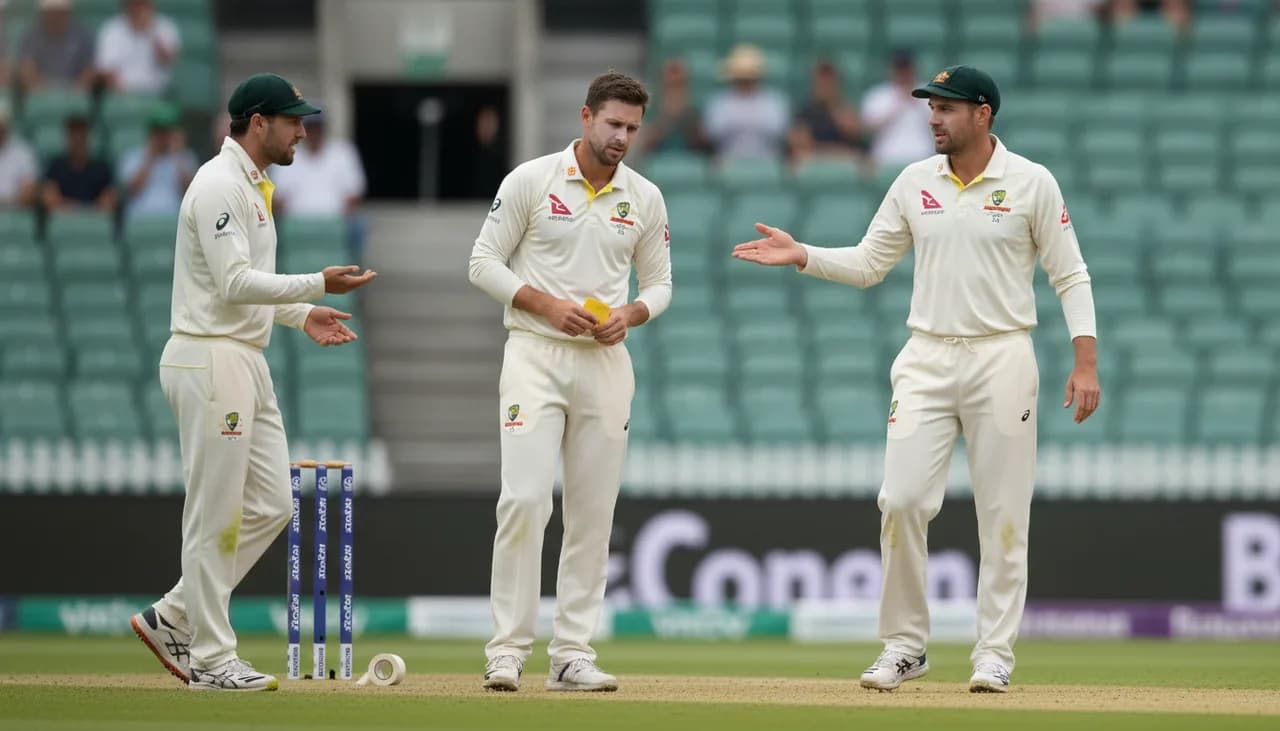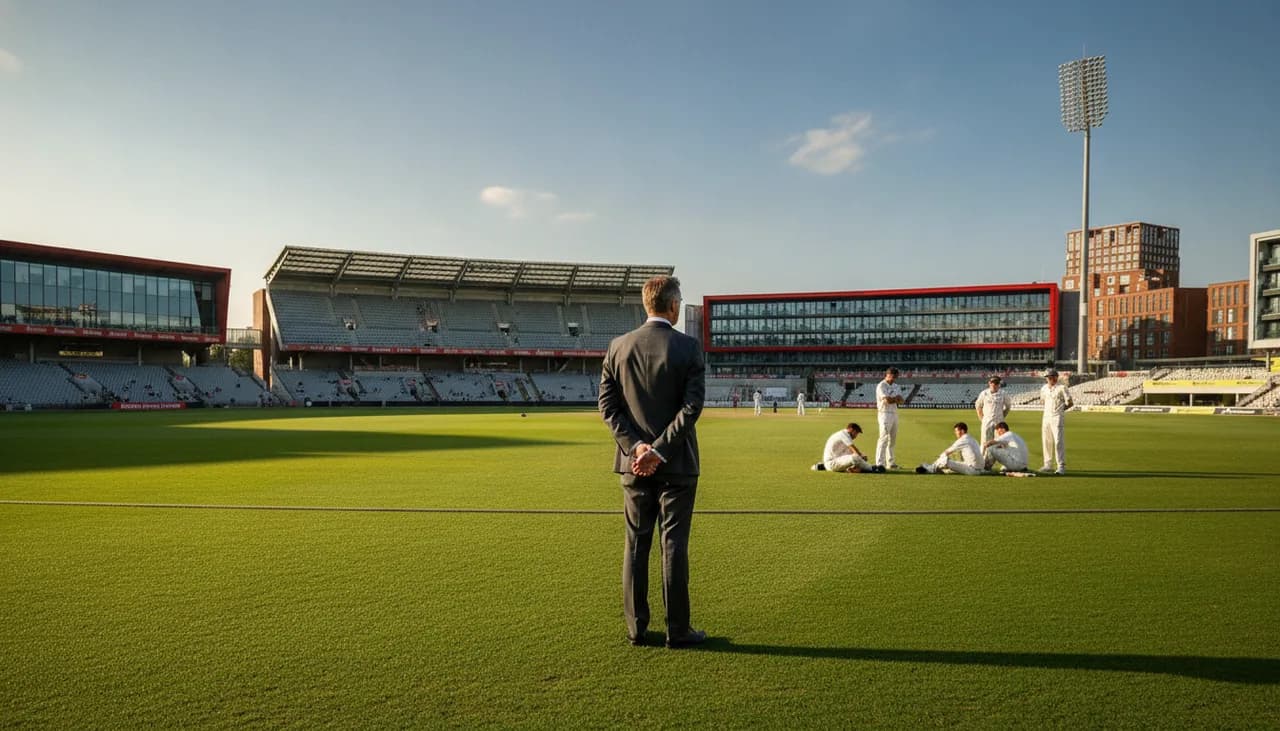

MELBOURNE — The hallowed turf of the Melbourne Cricket Ground has borne witness to some of Test cricket’s most epic, grueling battles. Yet, the memory of a match that lasted less than two full days of play continues to haunt the very man entrusted with its preparation. Matthew Page, the MCG’s head curator, has revealed he was left in a “state of shock” during England’s astonishing two-day demolition of Australia in the 2021 Boxing Day Test.
The third Test of the 2021-22 Ashes series was over in a breathtaking 842 balls, making it the shortest completed Test match in Australia since 1932. Australia, bowled out for 267 and 68, succumbed to an innings and 14-run defeat, with England’s seamers, led by the relentless James Anderson and Stuart Broad, exploiting a pitch offering significant seam movement and variable bounce. For Page, who had meticulously prepared the surface, the rapid conclusion and the intense scrutiny that followed were a profound professional and personal ordeal.
The Weight of Expectation and a Rapid Unraveling
The Boxing Day Test is the crown jewel of Australia’s sporting summer, routinely drawing crowds exceeding 80,000. The curator’s role is one of immense pressure, balancing the desire for a fair contest between bat and ball with the expectation of a match lasting four or five days. Page, who took over the revered role in 2020, had aimed for a traditional MCG pitch with good carry and pace that would flatten out as the match progressed. “You plan for five days of cricket,” Page later reflected in interviews.
The reality was starkly different. After England posted 185 in their first innings, Australia’s batting collapsed twice in swift succession. The sight of the world’s best batters, including Steve Smith and Marnus Labuschagne, being dismissed cheaply on a surface offering considerable assistance to the bowlers sent shockwaves through the cricket world. Criticism was immediate and fierce, with former players and pundits labeling the pitch “poor” and “not up to Test standard.”
A Curator's Defence and the "Perfect Storm"
In the aftermath, Page was compelled to defend his work, attributing the dramatic events to a confluence of factors beyond pure pitch preparation. He pointed to the unique atmospheric conditions during the match—heavy cloud cover, humidity, and a greenish tinge to the surface that aided swing and seam bowling to an extreme degree. “It was the perfect storm for bowling,” Page explained, emphasizing that under sunny skies, the same pitch might have behaved very differently.
He also highlighted the exceptional skill of England’s attack, particularly Anderson and Broad, who masterfully exploited those conditions. Furthermore, Page argued that some of the batting, especially in Australia’s second-innings capitulation for 68, was below Test standard. The psychological pressure of the collapse, he suggested, became a self-fulfilling prophecy. The key factors he identified included:
- Climatic Conditions: Persistent cloud cover and high humidity amplified swing.
- Bowling Excellence: England’s veteran seamers executed a flawless, full-length plan.
- Batting Pressure: The scoreboard pressure and deteriorating mindset led to poor shots.
- Pitch Character: A grass cover left to ensure pace and carry instead facilitated seam movement.
The Aftermath and Lessons for the Future
The fallout was significant. The MCG pitch received a “below average” rating from the ICC, a mark of official censure. For Page, the experience was deeply affecting. “I was in a state of shock for probably 24 to 48 hours after the game,” he admitted. The personal toll of public criticism, coupled with his own high standards, was immense. He described the period as one of intense scrutiny, where his professional judgment was questioned globally.
However, the event served as a catalyst for change. The MCG curating team, in collaboration with Cricket Australia, embarked on a thorough review of their processes. This involved:
- Investing in new soil technology and grass varieties to improve consistency and durability.
- Adjusting preparation timelines to better account for modern batting and bowling techniques.
- Placing a greater emphasis on creating pitches that are fair but offer genuine pace and bounce, a hallmark of Australian cricket.
Subsequent Boxing Day Tests have demonstrated a clear shift. The pitches in 2022 against South Africa and 2023 against Pakistan were widely praised for offering an excellent balance, producing compelling cricket that lasted the distance without being lifeless roads. The 2023 match, in particular, saw a record-breaking double-century from Pakistan’s Shan Masood and a thrilling contest, vindicating the new approach.
A Lasting Impact on the Curating Craft
The two-day Test remains a pivotal moment in the discourse around pitch curation. It underscored the fine line curators walk in the modern game, where marginal conditions can be ruthlessly exploited by world-class bowlers. Page’s candid admission of shock humanized a role often conducted behind the scenes, highlighting the immense pressure and pride involved in preparing an international sporting arena.
While the match was a nightmare scenario for a curator, it ultimately led to positive reforms. The MCG’s surfaces have regained their reputation for being sporting and challenging. Page’s resilience and his team’s scientific response turned a professional crisis into a learning opportunity for groundsmen across the country. “You learn more from your failures than your successes,” he has since noted, a philosophy born from one of the most dramatic days in Ashes history.
Today, when Page looks out across the vast expanse of the MCG, the memory of those two frantic days in December 2021 is undoubtedly still present. But it now coexists with the knowledge that the experience forged a better, more resilient approach to the art of pitch preparation, ensuring the Boxing Day Test remains a true test of skill for generations to come.