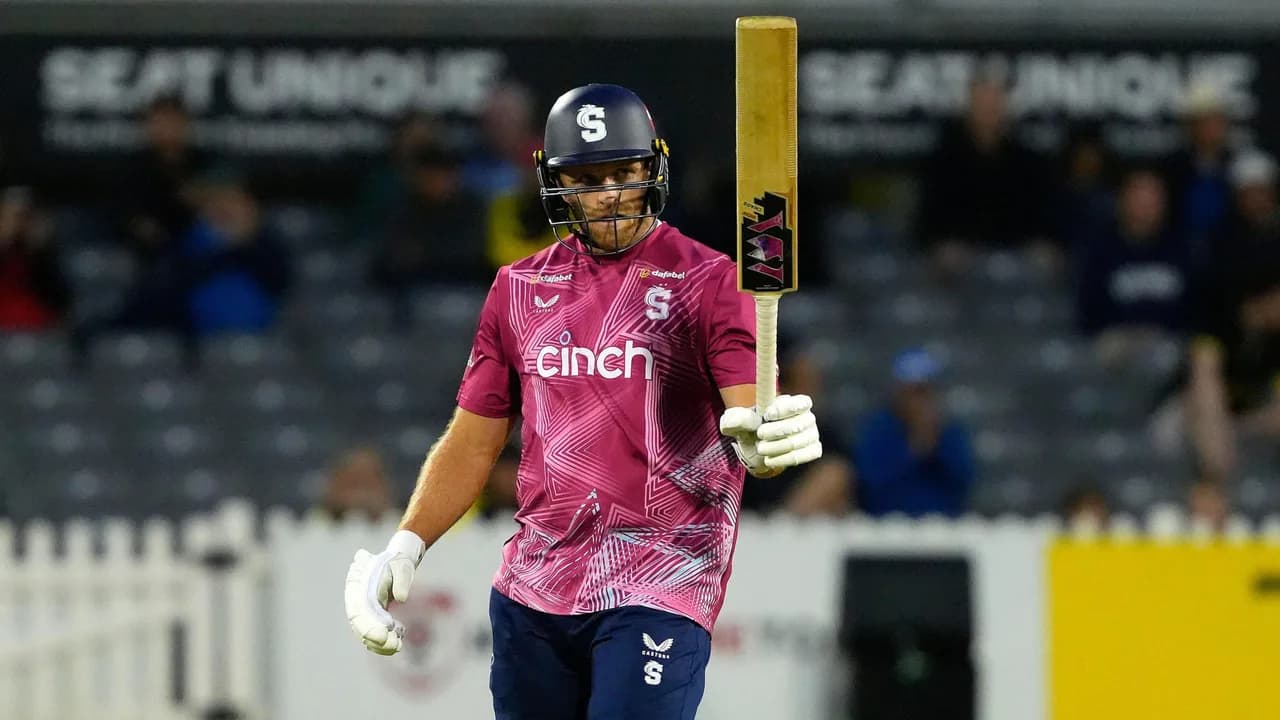
PERTH — The simmering tensions of the Ashes erupted once more on day two at the iconic WACA Ground, as a contentious DRS review resulted in the dismissal of England's wicketkeeper-batter, Jamie Smith, plunging the first Test into fresh controversy and leaving pundits and fans divided over the correctness of the decision.
The Crucial Moment
The incident occurred during a critical phase of England's first innings. Having fought back after losing early wickets, Smith was beginning to look settled at the crease, forming a promising partnership with the lower order. Facing Australian paceman Mitchell Starc, who was generating significant reverse swing, Smith played forward to a full, angled delivery that seamed back in sharply. The ball thudded into his front pad, and a raucous appeal from the Australian fielders was instantly upheld by the on-field umpire. Smith, looking aggrieved, immediately signaled for a review.
The Decision Review System (DRS) was then put to the ultimate test. The third umpire, tasked with scrutinizing the evidence, had three key questions to answer: Was there an inside edge? Where did the ball pitch? Was it hitting the stumps? Replays quickly eliminated the possibility of a bat-first impact, with UltraEdge showing a clear spike only as the ball passed the pad. The ball was confirmed to have pitched in line with the stumps. The entire decision, therefore, hinged on the Hawk-Eye ball-tracking projection.
Hawk-Eye: The Final Arbiter
As the virtual trajectory flashed up on the big screen, a collective gasp rippled through the stadium. Hawk-Eye showed the ball impacting Smith's pad just on the line of the leg stump. The projection then predicted the ball would go on to clip the very outside of the leg bail. According to the protocol, for the on-field decision to be overturned, the umpire's call must be shown to be clearly wrong. With the ball merely "clipping" the stumps, the decision fell into the "Umpire's Call" category, and the original 'out' decision stood.
Smith stood in disbelief for a moment before trudging off, his innings cut short at a potentially match-defining 41. The England dressing room wore a uniform look of frustration, with captain Ben Stokes seen having an animated discussion with the team coach. The dismissal proved to be a pivotal moment, as England's tail failed to add significant runs, handing Australia a substantial first-innings lead.
Pundits and Experts Weigh In
The decision immediately split opinion. Former Australian skipper Ricky Ponting, commentating for the host broadcasters, defended the process.
"It's frustrating for the batsman, no doubt, but the technology is there for a reason. Umpire's Call is a fundamental part of the system, designed to preserve the authority of the on-field official. The projection showed it was hitting the stumps, so by the letter of the law, it's out."
Conversely, former England captain Michael Vaughan was scathing in his criticism on social media, calling the ruling "a farce." He argued,
"The 'Umpire's Call' element on hitting the stumps needs a serious review. A batsman shouldn't be given out based on a projection that says the ball is only just clipping the stumps. The benefit of any doubt should go to the batter, especially when they've used their review."
The debate hinges on the margin of error inherent in the Hawk-Eye technology. While incredibly sophisticated, the system has a small degree of uncertainty. The "Umpire's Call" zone accounts for this margin. Key points in the argument include:
- For Umpire's Call: It upholds the primacy of the on-field umpire and acknowledges the technology is not 100% infallible.
- Against Umpire's Call: It creates a "gray area" where two identical deliveries could have different outcomes based solely on the initial on-field decision, which seems inherently unfair to many.
The Batting Camp's Reaction
Jamie Smith himself did not speak to the media after the day's play, but his teammate, all-rounder Chris Woakes, conveyed the team's sense of injustice.
"It's a tough one to take. From our viewpoint in the dressing room, it felt like the kind of 50/50 call that you hope might go your way on review. To see it just clipping the stumps is gut-wrenching, especially for a bloke who was playing so well."
A History of Ashes DRS Drama
This is far from the first time DRS has been at the center of an Ashes storm. The history of the contest is littered with technological controversies that have sparked debates about the spirit of the game versus the letter of the law. This incident in Perth will now be added to that long list, ensuring the DRS protocol remains under intense scrutiny for the remainder of the series.
Australian captain Pat Cummins, while sympathetic to Smith's plight, pointed out that these decisions tend to even out over a long series.
"It's never nice to see a player dismissed in that manner, but it's part and parcel of the game now. We've been on the wrong end of a few of those ourselves. You just have to accept it and move on."
Conclusion: The Right Decision?
So, was the right decision made? Technically and procedurally, the answer is an unequivocal yes. The third umpire followed the ICC's protocols to the letter. The ball was shown to be hitting the stumps, and with the on-field call being 'out', the decision was correctly upheld. However, the question of whether the *system* made the *fair* decision is a much more complex and subjective debate. The "Umpire's Call" rule, while designed to manage technological uncertainty, continues to be the most contentious aspect of DRS. For England and Jamie Smith, it feels like a brutal twist of fate. For Australia, it's a fortuitous application of the rules. In the cauldron of the Ashes, this controversy is guaranteed to fuel the fire for the days to come.