
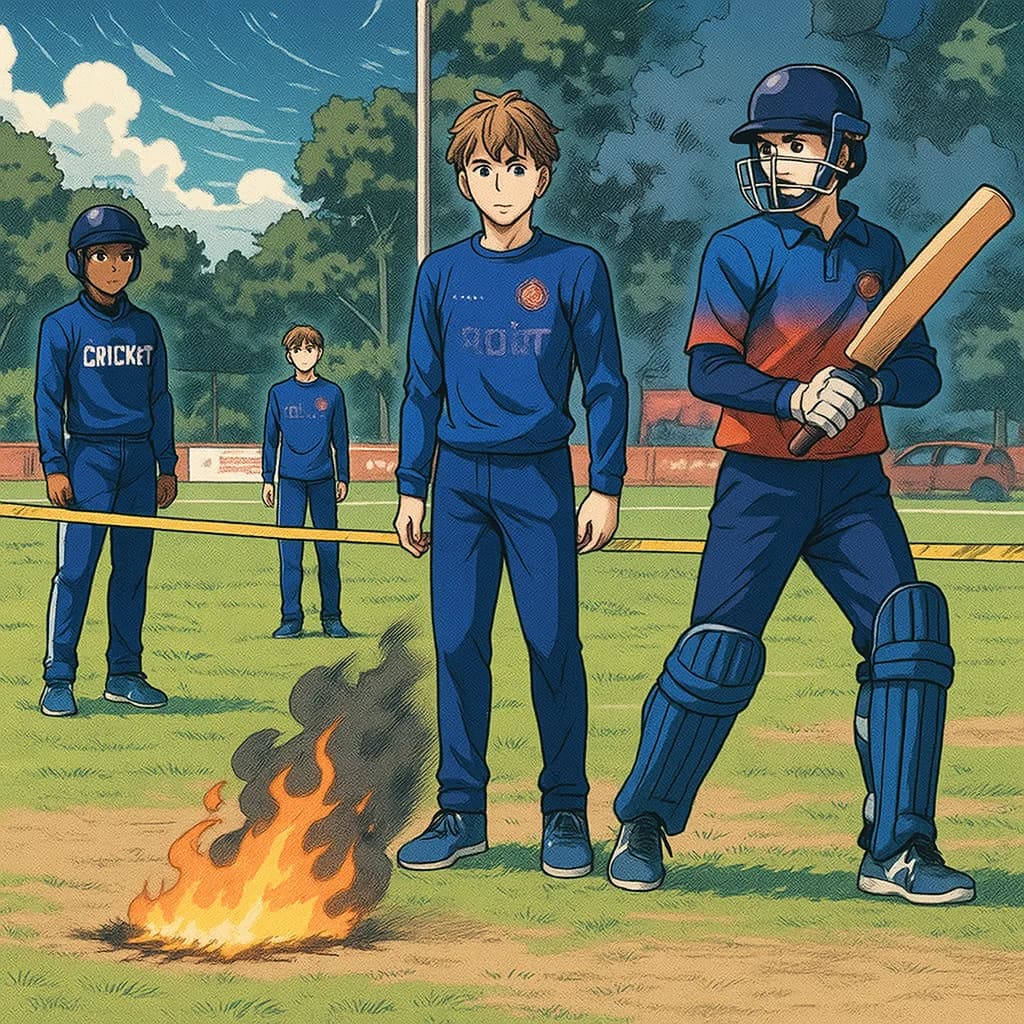
WINDHOEK — In a bizarre and deeply frustrating turn of events, Scotland’s crucial one-day international against Namibia was abandoned without a single ball being bowled on Wednesday, despite the best—and most unusual—efforts of the local groundstaff, who resorted to using fire to try and dry a saturated outfield at the Wanderers Cricket Ground.
The match, part of the ICC Cricket World Cup League 2 tri-series also involving Oman, was called off after multiple inspections by the umpires, who deemed the surface unsafe for play. This decision came after a significant delay, during which spectators and players alike watched in disbelief as ground staff attempted to burn patches of wet grass in a desperate bid to accelerate the drying process under the Namibian sun.
The abandonment deals a significant blow to Scotland’s hopes of automatic qualification for the 2027 World Cup, costing them two valuable points in a tightly contested standings table. For Namibia, the no-result is also a missed opportunity to solidify their own position in the league. The teams will now look to their final fixtures in the series, with Scotland scheduled to face Oman on Friday.
A Soggy Start and Unconventional Measures
Heavy overnight rain left the Wanderers Ground in Windhoek waterlogged, with large puddles covering the outfield and creating a visibly hazardous environment for the athletes. The start was initially delayed, with officials hopeful that the strong African sun and a brisk breeze would work their magic. However, as the morning progressed, it became clear that natural evaporation would not be sufficient.
It was then that the groundstaff, in a move that left many seasoned cricket observers astounded, brought out bundles of paper and kindling. They set small, controlled fires on the wettest parts of the outfield, a traditional local method believed to dry the top layer of soil and grass more quickly. Thick plumes of white smoke drifted across the ground, creating a surreal spectacle.
A Cricket Scotland spokesperson later remarked on the unusual scene, stating, "We've seen some interesting ground management techniques in our time, but this is certainly a first. The commitment to get the game on was undeniable, even if the methods were unconventional."
Player Frustration and Safety Concerns
Despite the fiery efforts, the umpires remained unconvinced that the playing conditions were safe. The primary concern was player welfare, particularly the risk of injury from a soft, uneven, and potentially slippery outfield. Fielders running at high speed or changing direction quickly would have been in significant danger.
Scotland captain Richie Berrington expressed his team’s collective disappointment. He was quoted saying, "It's incredibly frustrating for both teams. We prepared for a full game of cricket, and points are so crucial at this stage. You have to trust the umpires' decision on safety, but it's a tough pill to swallow."
The concerns were not limited to the fielding side. A damp outfield would have also affected the condition of the ball, potentially making it sodden and difficult for bowlers to grip, while also slowing it down off the pitch, negating any advantage for the bowlers and creating an unbalanced contest.
The Wider Context: A Costly No-Result
The abandonment has significant ramifications for the ICC Cricket World Cup League 2, a multi-year competition that serves as a primary pathway to the 2027 World Cup. Each match point is critical in the race for the top three spots, which guarantee automatic qualification for the global tournament.
For Scotland, every game is an opportunity to accumulate points and build a buffer against other chasing teams. This no-result represents two points lost, a setback that could prove costly in the long run. The team's management emphasized the frustration, noting the extensive travel and preparation that goes into each fixture.
Key implications of the abandoned match include:
- Points Distribution: Both teams share the points, which helps neither side.
- Net Run Rate: The abandonment denies both teams a chance to improve their net run rate.
- Fixture Congestion: Finding a suitable date to replay the match presents a major logistical challenge.
Historical Precedent and Local Knowledge
While the sight of a burning cricket field is jarring to the international cricket community, the practice is not entirely unknown in some parts of the world, including parts of southern Africa. It is a rudimentary agricultural technique used to remove excess moisture and dead grass, encouraging new growth.
A local journalist covering the match explained, "It's a method born of necessity and limited resources. You won't see it at Lord's or the MCG with their state-of-the-art drainage systems, but here, it's a traditional quick-fix. It has worked on club grounds before, but international standards are just different."
The incident highlights the vast disparities in facilities and resources between full-member nations and associate teams, who often have to make do with less. Despite the best intentions of the groundstaff, the method was ultimately insufficient to meet the stringent safety requirements of an international fixture.
Looking Ahead: Lessons Learned
The bizarre abandonment will undoubtedly lead to discussions between Cricket Namibia and the ICC about contingency planning for adverse weather. Investing in more modern ground drainage technology, though expensive, may be necessary to prevent a recurrence of such a scenario and to ensure that valuable competitive matches can be completed.
For the players, the focus must now immediately shift to their next challenges. The mental reset required after a long, anticlimactic day is itself a test of professionalism. As one Scotland player put it, "You just have to park it and move on to the next game."
In the end, the image of a smoldering cricket field in Namibia will stand as a strange and poignant symbol of the immense desire to play the game, the harsh realities of weather, and the vast gulf in resources within the world of international cricket. The fire burned, but the match was lost to the damp earth beneath.