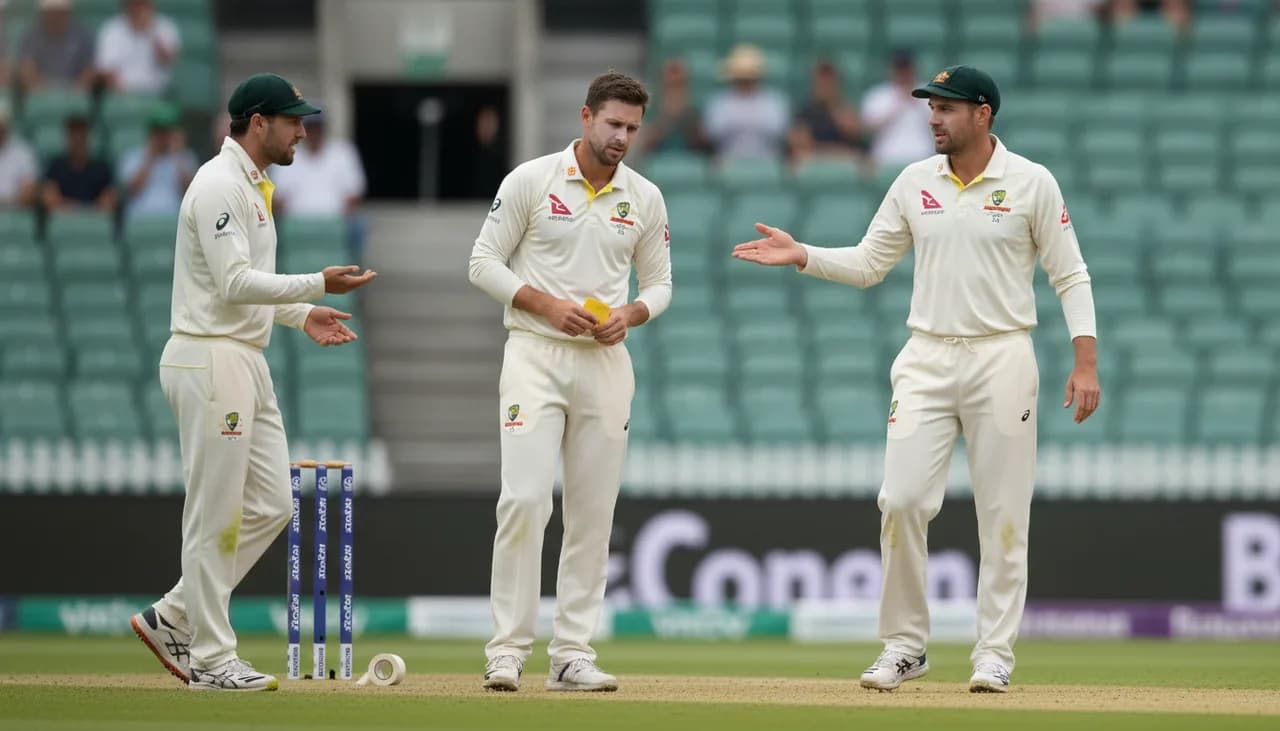

HAMILTON — New Zealand produced a ruthless and clinical performance on the fourth day at Seddon Park, bowling the West Indies out for 138 to win the third and final Test by a commanding 323 runs. The victory sealed a 2-0 series triumph for the Black Caps, who were dominant throughout the home summer, reinforcing their formidable reputation in their own conditions.
The result was a fitting conclusion to a series where New Zealand’s depth and discipline proved too much for a visiting side that showed flashes of fight but lacked the consistency to sustain it. After setting the West Indies a mammoth target of 462, the Kiwi seam attack, led by the relentless Tim Southee, needed just 47.2 overs on Monday to dismantle the batting order and secure the series win.
Southee Leads the Charge with Ball and Tactics
New Zealand captain Tim Southee set the tone for the final day with a masterful display of new-ball bowling. Operating with precision and menace, he removed key batsmen Kraigg Brathwaite and Kirk McKenzie early, effectively ending any remote hopes of a miraculous West Indian rearguard. Southee finished with impressive match figures of 8-128, but his impact was felt beyond the wickets column. His aggressive field placements and shrewd bowling changes kept constant pressure on the tourists. Reflecting on the series win, Southee emphasized the collective effort, stating, "It's always nice to contribute, but it was a great team performance across the board. We asked for a bit of a response after the drawn first Test, and the boys were brilliant."
A Familiar Collapse Seals West Indies' Fate
The West Indies' second innings followed a dishearteningly familiar script from their tour. While Alick Athanaze (28) and Kavem Hodge (34) offered brief resistance in a 40-run partnership, the collapse was always imminent. Once spinner Mitchell Santner broke the stand by trapping Athanaze lbw, the last seven wickets tumbled for just 56 runs. The lower order had no answer to the sustained pressure, with the final five batters managing a combined total of just 15 runs. The manner of the dismissal highlighted several persistent issues for the West Indies:
- Top-order fragility: The opening partnership failed to provide a platform in five of the six innings this series.
- Middle-order instability: Promising starts were repeatedly squandered, preventing the building of match-saving partnerships.
- Tail-end vulnerability: The lower order offered little resistance, often succumbing to scoreboard pressure.
Williamson's Masterclass the Series Foundation
While the final day belonged to the bowlers, the series victory was built on the monumental first-innings batting of Kane Williamson. The champion batsman struck a majestic, unbeaten 133 in challenging conditions, rescuing New Zealand from a precarious 89 for 4. It was his seventh century in his last seven Tests, a staggering run of form that places him among the game's all-time greats. His partnership with wicketkeeper Tom Blundell, worth 149 runs, was the decisive passage of the match. West Indies captain Kraigg Brathwaite acknowledged the difference Williamson made, saying, "Williamson's innings was the turning point. We had them under pressure early, but his knock took the game away from us."
Supporting Cast Steps Up
Beyond Williamson and Southee, New Zealand received crucial contributions across the squad. Glenn Phillips continued his emergence as a genuine all-round threat, scoring a vital 71 in the first innings and claiming three key wickets with his off-spin in the second. Debutant speedster Will O'Rourke, building on his impressive debut in the second Test, chipped in with three second-innings wickets, showcasing the promising depth in New Zealand's fast-bowling stocks. The consistent Daryl Mitchell also played a pivotal role throughout the series, providing stability in the middle order.
A Summer of Dominance for the Black Caps
This series win caps a perfect home Test summer for New Zealand, having previously swept Bangladesh 2-0. The Black Caps were nearly flawless in their execution, particularly in the final two Tests against the West Indies. Their formula was effective and repeatable: bat big in the first innings, unleash a varied and relentless bowling attack, and never allow the opposition to breathe. The success was built on a blend of veteran savvy and exciting new talent, suggesting a healthy future for the Test side. Coach Gary Stead praised the team's adaptability, noting, "The way we adjusted after the drawn Test in Wellington was perfect. We asked for more intent and discipline, and the players delivered that in spades."
Questions Linger for West Indies' Test Future
For the West Indies, the tour ends with more questions than answers. While there were individual moments of brilliance—such as Shamar Joseph's fairytale debut in the first Test and the fighting century from debutant Kevin Sinclair in Wellington—the team lacked the consistency required to compete over five days in overseas conditions. The batting remains a major concern, with only two centuries scored in six innings, both coming from lower-order players. The bowling, while spirited, often lacked the cutting edge to bowl out New Zealand twice. The result extends a difficult away record, placing further importance on their upcoming home series against strong opponents.
Looking Ahead: Contrasting Paths
The two teams now diverge onto different paths. New Zealand will look to carry this momentum into their next assignments, with a focus on improving their record abroad. Their next challenge is a significant one, with a tour to face Asian opponents later in the year. The core of the side remains settled, and the emergence of players like O'Rourke and Phillips provides welcome selection headaches. For the West Indies, the focus shifts to rebuilding and identifying a core group of players capable of competing in the Test arena. The development of young talents like Joseph and Sinclair will be crucial, but they require more support from the established top order. Captain Kraigg Brathwaite summed up the challenge, "We showed we can fight in moments, but Test cricket is about doing it for five days. We have to learn from this and be better for longer."
Ultimately, the series at Seddon Park was a demonstration of Test match ruthlessness. New Zealand, led by their iconic captain and their world-class batsman, identified weaknesses and exploited them without mercy. The 323-run margin of victory in the final Test is a stark reflection of the gulf between the two sides over the past fortnight, as the Black Caps confidently wrapped up another series win on home soil.