DUBAI — In a high-stakes encounter that lived up to its billing for on-field drama but fell short for off-field sportsmanship, India secured a comfortable six-wicket victory over arch-rivals Pakistan in their Super Four clash of the Asia Cup. The match, played under lights at the Dubai International Stadium, was marked by intense cricketing moments and a familiar, frosty conclusion, as players from both sides once again refrained from the traditional post-match handshakes.
The victory, built on a disciplined bowling performance and a composed chase, keeps India's campaign for the continental title firmly on track. However, the post-match protocol, or lack thereof, has once again become the focal point of discussion, overshadowing a clinical display of cricket from Rohit Sharma's men and highlighting the deep-seated political tensions that continue to define this storied rivalry.
A Bowling Masterclass Sets the Stage
After being put into bat first, Pakistan's innings never found its rhythm against a relentless Indian bowling attack. The new-ball pair of Bhuvneshwar Kumar and Arshdeep Singh applied immediate pressure, with the latter striking early to remove the dangerous Babar Azam for a mere 14 runs. The Pakistani captain's dismissal, caught at slip off a beautiful delivery that angled away, sent a wave of silence through the pro-Pakistan sections of the crowd and set the tone for the innings.
The middle overs were dominated by India's spinners, with Ravi Bishnoi and Yuzvendra Chahal weaving a web around the Pakistani batsmen. The required run rate climbed steadily as boundaries became a rarity. Key performers included:
- Bhuvneshwar Kumar: The veteran seamer returned figures of 2/25, expertly using variations in pace.
- Ravi Bishnoi: The young leg-spinner was economical, conceding just 26 runs in his 4 overs.
- Hardik Pandya: Provided the crucial breakthrough, dismissing Mohammad Rizwan for 43.
Pakistan ultimately posted a below-par total of 128 for 8 in their allotted 20 overs, a score that always seemed 20-30 runs short on a decent batting surface. The Indian fielding was sharp, and the bowling plans were executed to perfection, leaving Pakistan with a mountain to climb in defense.
India's Chase: Composed and Clinical
In response, India's chase was a model of calculated aggression. While they lost KL Rahul early, Rohit Sharma and Virat Kohli steadied the ship with a partnership that effectively broke the back of the target. Sharma, in particular, was in belligerent form, smashing 4 sixes in his 28-ball 39. His innings provided the momentum, ensuring the required run rate never became a concern.
After Sharma's dismissal, Kohli anchored the innings with a characteristically professional unbeaten 47. He found a capable partner in Suryakumar Yadav, who played a fluent cameo to seal the victory with two overs to spare. The Pakistani bowlers, notably Haris Rauf and Naseem Shah, bowled with heart and pace but were ultimately let down by the inadequacy of the total they were defending.
The Lingering Shadow: The Absence of Handshakes
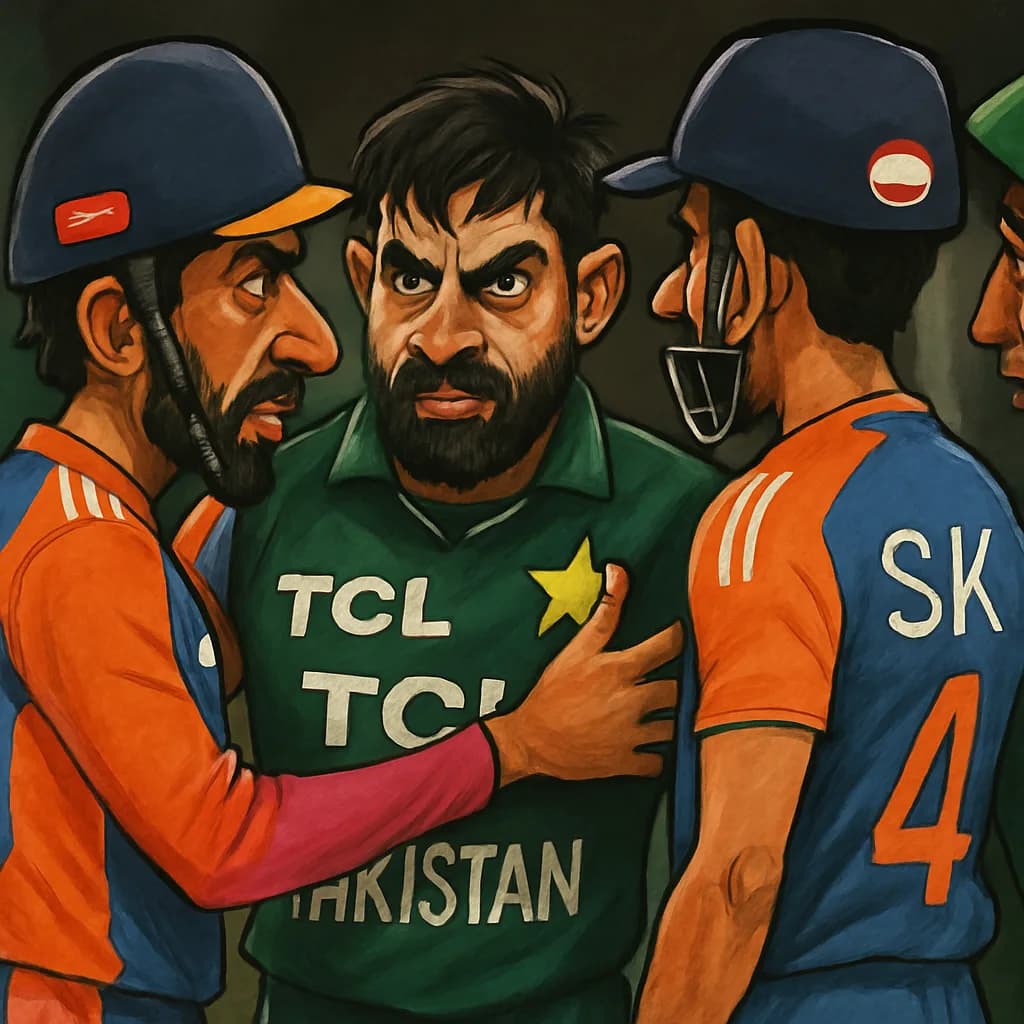
For the second time in recent meetings, the on-field contest concluded without the customary exchange of pleasantries. As the final wicket fell, Indian players celebrated amongst themselves while the Pakistani team quickly exited the field. The scene was a repeat of their encounter in the 2022 T20 World Cup, cementing a new and uncomfortable norm in one of sports' greatest rivalries.
This recurring absence is widely interpreted as a direct result of the soured political relations between the two nations, which has inevitably spilled onto the cricket field. A BCCI official, speaking on condition of anonymity, stated, "The players are not instructed to avoid handshakes, but there is an understanding of the current sentiment. It's a sensitive issue."
Historical Context and Fan Reaction
The handshake has long been a symbol of cricket's spirit—a gesture of respect and camaraderie after a hard-fought battle. Its absence in this fixture is a stark departure from tradition. While some fans on social media expressed disappointment, calling the lack of a handshake "against the spirit of cricket," others understood it as a reflection of the undeniable geopolitical realities that the players represent.
Cricket analyst Harsha Bhogle commented on the broadcast, "It's a sad sight, truly. But it's also a reminder that these athletes carry the weight of history on their shoulders every time they walk out to play this fixture. The handshake has become a political statement, whether they want it to be or not."
Looking Ahead: More Than Just a Game
The match result solidifies India's position as a tournament favorite, while Pakistan must regroup quickly for their remaining Super Four matches. Yet, the scoreline feels secondary to the broader narrative. The "no-handshake" policy, though unspoken, speaks volumes about the state of Indo-Pak relations.
The focus now shifts to the possibility of a third meeting between these two sides in the tournament final. Should that occur, it will present another chapter not just in their cricketing rivalry, but also in the ongoing, complex dialogue—or lack thereof—that happens through sport. The hope for a return to normalcy and the simple, respectful handshake remains, but for now, it appears to be a bridge too far.
The PCB and BCCI have not issued official statements regarding the post-match incident, preferring to let the cricket do the talking. But as this match proved, in contests between India and Pakistan, the actions after the final ball are often as loud as the roar of the crowd during it.