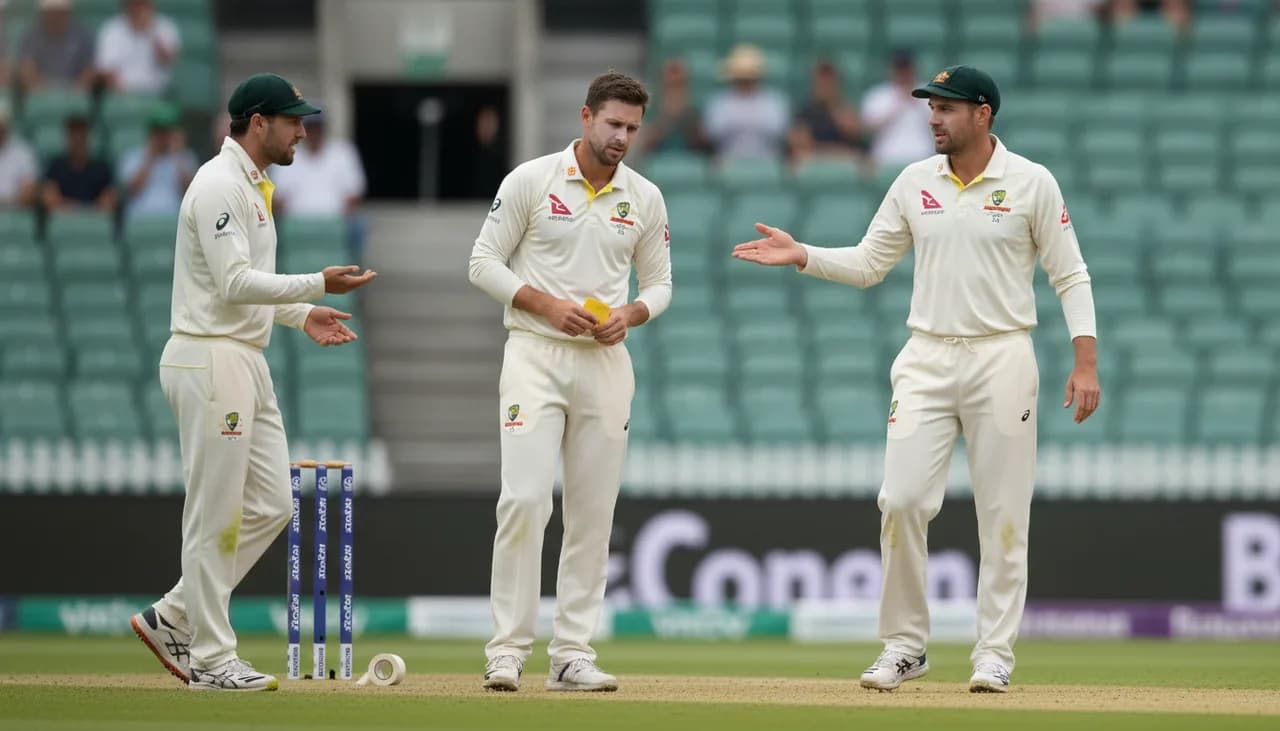

LONDON — In the wake of a humbling 36-run defeat to Australia in the T20 World Cup group stage, England captain Ben Stokes delivered a stark and uncompromising assessment of his team’s character, questioning the mentality within the dressing room and declaring there is "no place for weak men" in his side.
The loss in Barbados, which saw England bowled out for 165 while chasing a modest target of 202, has left the defending champions’ campaign in a precarious position. While the margin was not catastrophic, the manner of the performance—a faltering chase littered with poor shot selection and a lack of collective fight—prompted a furious internal response from the leadership.
Stokes Questions Team's "Backbone"
Speaking with raw honesty in the post-match press conference, Stokes did not mince words. He shifted focus away from technical failings and squarely onto the psychological fortitude—or lack thereof—displayed by his players. "I don't think there's any point sugar-coating it, we were just crap," he began, setting a confrontational tone.
He elaborated on the core of his frustration, stating, "When the pressure is on, that's when your true character comes out. We didn't stand up today. We didn't show the backbone you need in international cricket, especially against a team like Australia. There's no place for weak men in this dressing room, and we were weak today."
This rhetoric marks a significant shift from the typically positive, aggressive language associated with the ‘Bazball’ era. Stokes, known for leading from the front with relentless determination, seemed to be issuing a direct challenge to his squad. His comments implied that some players may have succumbed to the occasion, a charge he finds unacceptable at this level. The defeat exposed several critical issues:
- A top-order collapse that saw England lose three wickets in the powerplay.
- A lack of substantial partnerships to rebuild the innings under scoreboard pressure.
- A perceived failure to adapt to the slowing Barbados pitch as the chase progressed.
McCullum's Surprising Admission: "We Trained Too Much"
Adding a fascinating and counter-intuitive layer to the post-mortem, head coach Brendon McCullum offered a surprising self-critique. While supporting Stokes’s call for greater mental resilience, McCullum suggested the preparation in the lead-up to the match may have been counterproductive. "In hindsight, we got it wrong," McCullum admitted. "We probably trained too much. We were desperate, we were hungry, and sometimes that desire leads you to over-prepare."
This admission is particularly striking given the philosophy McCullum and Stokes have championed, which prioritizes freedom, confidence, and instinct over grinding net sessions. McCullum explained that the team, aware of the magnitude of the Australia fixture, might have fallen into the trap of trying to force readiness through excessive practice, potentially leaving the players mentally and physically "a bit flat" on match day. "The guys care so much, they want to perform for the country. But we need to be smarter. Sometimes less is more, and we need to trust the talent and the work we've already put in."
A Clash of Philosophies Under Pressure?
The contrasting yet complementary critiques from captain and coach present a nuanced picture. Stokes’s comments target the in-game application of the team’s philosophy—the failure to embody the fearless, resilient identity they claim to own. McCullum’s analysis looks at the preparation that underpins it, questioning whether they strayed from their own principles in search of an edge.
This moment represents a critical stress test for the ‘Bazball’ project in white-ball cricket. The approach has yielded a T20 World Cup title and a revolutionary transformation in Test cricket, but it is predicated on unwavering self-belief. Stokes’s fear appears to be that this belief can quickly look like arrogance if not backed by steely nerve when plans go awry.
The Road Ahead: A Defining Moment
With their Super 8s qualification now dependent on other results and their final group game against Namibia, England find themselves at a crossroads. The leadership has deliberately raised the stakes with their public comments. The reaction in the coming days will be telling.
Will the players respond to Stokes’s challenge with a display of the hardened character he demands? Can McCullum recalibrate the preparation to restore the team’s trademark clarity and freedom? The answers will determine not only their fate in this World Cup but also the sustainability of their high-risk, high-reward brand of cricket. As Stokes framed it, this is now a test of who can handle the pressure. "It's easy to play this game when you're on top and everything is going well. The great players, the great teams, stand up when it's not. We have to decide now who we want to be."