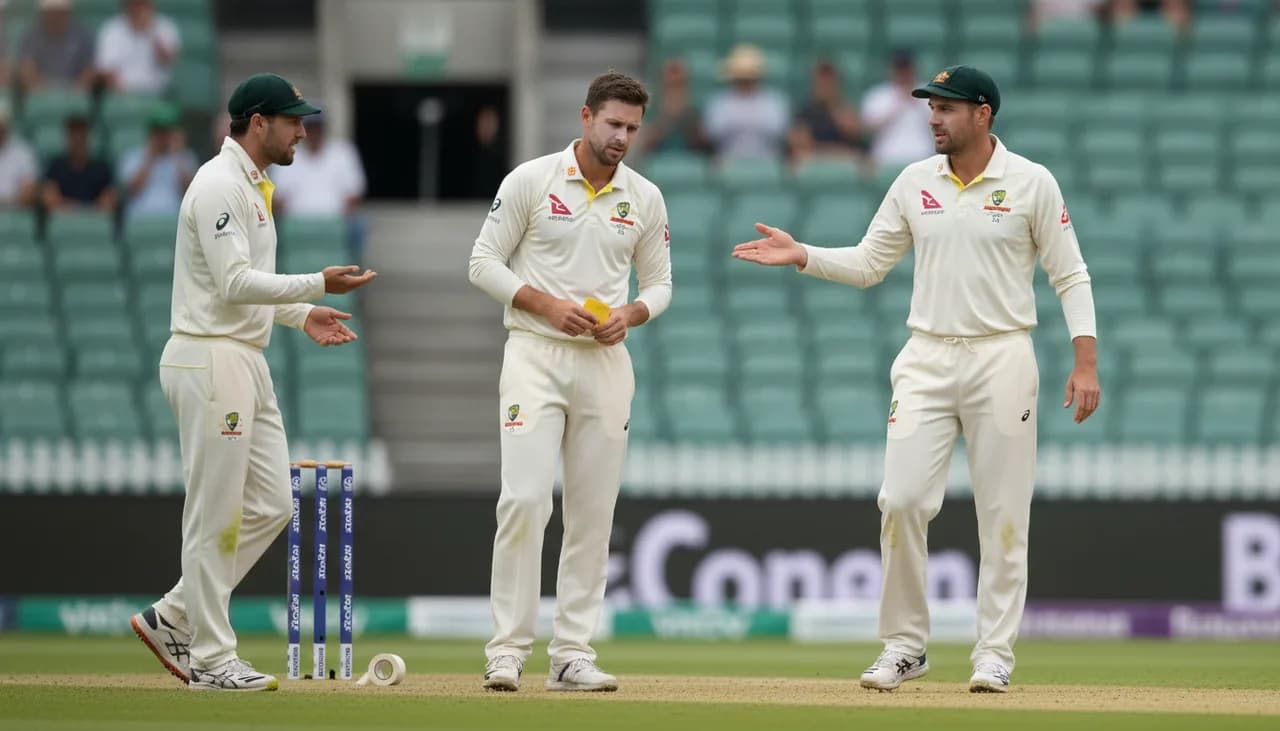
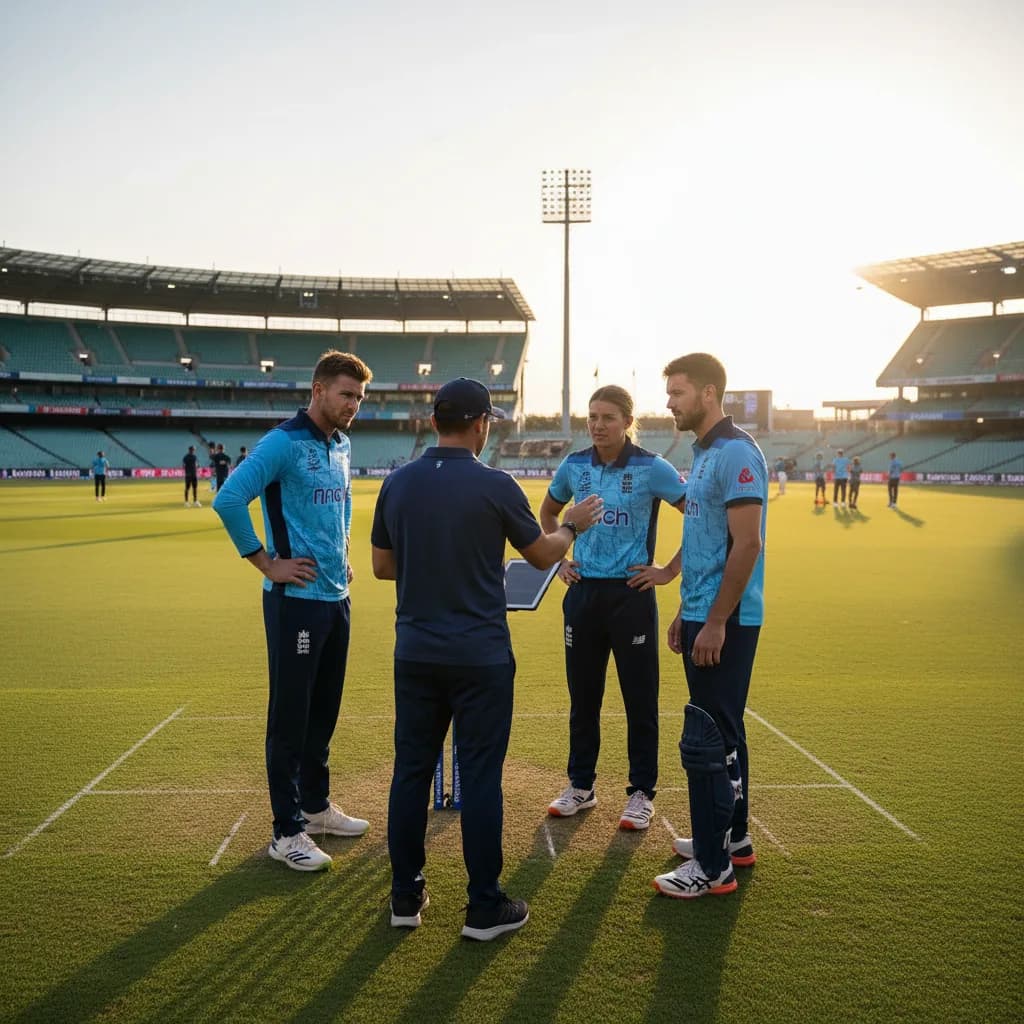
The relentless, year-round nature of modern cricket has come under fierce scrutiny from one of the game's most powerful administrators, with England and Wales Cricket Board (ECB) chairman Richard Thompson issuing a stark warning that players are being pushed to their physical and mental limits. In a candid assessment of the sport's global calendar, Thompson stated that the current schedule is "unrelenting" and that a fundamental review is urgently required to safeguard player welfare.
Thompson's comments, made during a wide-ranging interview, highlight a growing crisis within the international game. The proliferation of domestic T20 franchise leagues, coupled with a packed schedule of bilateral international series and global ICC events, has created a perfect storm where elite cricketers are in near-constant motion. "We have to look at the schedule," Thompson asserted. "There are players who are just exhausted."
The Unyielding Grind of the Modern Cricketer
The life of a top-tier international cricketer in 2024 is a whirlwind of airports, hotel rooms, and competitive pressure. The traditional rhythm of the sport, built around distinct seasons for different formats, has evaporated. Now, a player might be competing in a high-stakes Test series one week, flying across the world for a T20 league the next, and then immediately linking up with their national team for a one-day international tournament. This non-stop cycle leaves little room for rest, recuperation, or family life.
The physical toll is immense, with soft-tissue injuries, stress fractures, and burnout becoming increasingly common. However, Thompson’s remarks bring the often-overlooked mental toll into sharp focus. The psychological burden of perpetual performance, coupled with the isolation of long periods away from home, is creating an environment where player well-being is being compromised for the sake of commercial revenue and calendar saturation.
A Global Problem Requiring a Global Solution
Thompson’s intervention is significant because the ECB is both a major stakeholder in world cricket and a primary contributor to the problem. England’s own summer schedule is famously congested, often featuring multiple Test series, a white-ball tour, and The Hundred compressed into a few short months. Furthermore, English players are among the most sought-after in global T20 leagues, including the IPL, SA20, and ILT20.
This underscores the central challenge: the issue is international and requires coordination between all national boards and the International Cricket Council (ICC). No single board can unilaterally solve the problem without risking its competitive or financial standing. The FTP (Future Tours Programme) dictates the framework for bilateral cricket, while independent league schedules fill the remaining gaps, often with little consideration for the players shuttling between them.
Key pressure points in the current schedule that Thompson and other administrators must address include:
- The direct overlap of certain franchise leagues with international windows.
- Insufficient gaps between series for travel and acclimatization.
- The increasing number of ICC events, such as the expansion of the T20 World Cup.
Player Voices: From Whisper to Roar
Thompson’s comments give official voice to concerns that players have been expressing for years. While stars like Ben Stokes have famously taken breaks to prioritize their mental health, and pace bowlers like Jofra Archer and Mark Wood have battled persistent injuries linked to workload, the overall system has remained unchanged. The professional cricketers’ associations, including the Federation of International Cricketers' Associations (FICA), have long advocated for a more manageable calendar.
Their data consistently shows that players are playing more cricket than ever before, with the number of days away from home hitting record levels. The financial incentives, particularly from T20 leagues, are powerful, but they create a dilemma for players who feel compelled to play constantly to secure their financial futures, even at the expense of their health. "It's a choice between your career and your well-being," one anonymous player recently noted.
The Path Forward: Prioritizing People Over Profit
For Thompson’s warning to translate into meaningful action, cricket’s leaders will need to make difficult choices that may involve sacrificing short-term revenue for long-term sustainability. Potential solutions could involve creating mandatory rest periods written into central contracts, stricter regulations on player participation in leagues, and a fundamental redesign of the FTP to include more breathing room.
The most radical solution, often debated, is the move towards a more formalized system of qualification and windows for franchise leagues, similar to football’s model. This would provide structure and clarity, allowing players to plan their year and ensuring national teams have guaranteed access to their stars for international fixtures. However, achieving consensus among boards with vastly different financial motivations remains a monumental hurdle.
A Critical Juncture for the Sport
Richard Thompson’s candid admission that players are "exhausted" is a watershed moment. It is an acknowledgment from the highest level of the English game that the current path is unsustainable. The well-being of the players—the sport's greatest asset—is non-negotiable. If cricket continues to ignore the human cost of its commercial success, it risks a wave of premature retirements, a decline in the quality of international cricket, and a serious moral failure.
The conversation started by Thompson must now evolve into concrete action. National boards, the ICC, and league organizers have a collective responsibility to create a calendar that allows the sport to thrive without burning out the very individuals who make it great. The future health of cricket depends on it. As Thompson himself implied, the time for looking at the schedule is over; the time for changing it is now.