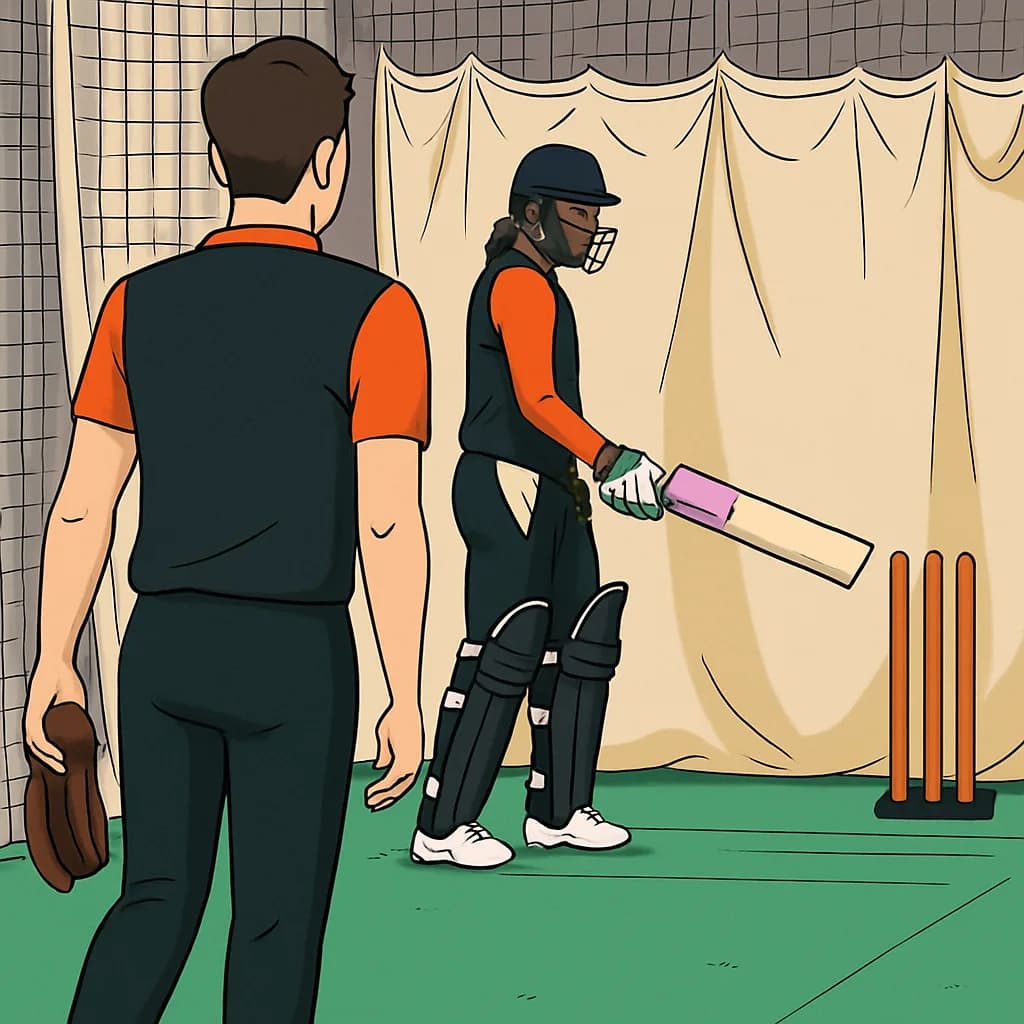
The image of cricket is inextricably linked to summer: the scent of freshly cut grass, the sound of leather on willow echoing under a blazing sun, and the sight of players in crisp whites against a backdrop of deep blue sky. Yet, for the thousands of cricketers across the United Kingdom and other temperate nations, the reality of preparation for this quintessential summer sport unfolds in a very different setting. It is a world of grey afternoons, biting winds, and frost-covered pitches. Preparing for a summer sport, in cold English weather, proves difficult, says Grace Ballinger, a sports scientist and former academy coach, encapsulating the unique challenge at the heart of modern winter training.
The Off-Season Conundrum: From Preservation to Progression
Historically, the winter months were a period of hibernation for cricketers—a time for rest, recovery, and perhaps a little net practice in a draughty barn. The primary goal was simply to maintain a base level of fitness and not lose too much form. Today, that paradigm has shifted dramatically. The professional calendar, with tours to the southern hemisphere and early-season competitions, demands that players not only preserve their skills but make significant technical, tactical, and physical gains during the off-season. The winter is no longer a break; it is a critical phase of concentrated development.
This creates a fundamental logistical problem. The core skills of batting, bowling, and fielding are honed through thousands of repetitions in conditions that mimic the game. How does a fast bowler work on their rhythm when run-ups are icy? How does a batter practice playing late on a bouncy pitch when the outdoor nets are waterlogged? The modern solution is a blend of technology, ingenuity, and a heavy reliance on indoor facilities, transforming the winter from a period of limitation to one of focused opportunity.
The Indoor Revolution: Not Just a Sports Hall
The centrepiece of winter training is the indoor cricket school. These are far removed from the simple school gymnasiums of old. State-of-the-art centres, like the ones utilised by county academies and the England national teams, feature:
- True Bounce Pitches: Synthetic or concrete-based strips designed to replicate the consistent bounce of a good turf wicket, allowing batters and bowlers to trust the surface.
- Bowling Machines & Video Analysis: Advanced machines like the "Merlyn" spin bowler can replicate any delivery in the world, while high-speed cameras break down every facet of a player's technique for micro-adjustments.
- Large, High-Bay Spaces: Providing enough room for bowlers to use their full run-up and for fielders to practice high catches and boundary work.
However, as Ballinger notes, the artificial environment has its drawbacks. "The light is different, the sound is different, the space feels different. You can become a brilliant indoor cricketer, but translating that to a grey, seaming wicket at Chester-le-Street in April is another skill entirely." Coaches, therefore, deliberately introduce "chaos" into sessions—using uneven balls, variable bounce strips, and specific scenario-based drills to bridge the gap between the sterile indoor net and the unpredictable outdoor game.
Strength, Conditioning and "The Athlete First"
Winter is the prime time for physical development. With the relentless grind of match travel reduced, strength and conditioning coaches take centre stage. The focus moves from "cricket fitness" to building a more robust, powerful, and injury-resilient athlete. Programs are highly individualised: a young fast bowler will undergo a rigorous regimen to build lean muscle and tensile strength in the shoulders and core, while a top-order batter might focus on explosive power for running between the wickets and rotational strength for more powerful shots.
This period is also crucial for rehabilitating niggles and addressing biomechanical imbalances accrued during the long season. Using motion-capture technology and force plates, coaches can analyse a bowler's action to identify inefficiencies that lead to stress, or assess a batter's stance for optimal power generation. The mantra, as one England and Wales Cricket Board (ECB) lead conditioner put it, is "we are building athletes who play cricket, not just cricketers trying to be athletes."
The Mental Game: Visualisation and Tactical Blueprints
With physical practice constrained, the winter becomes a fertile period for mental and tactical development. Sports psychologists work with players on visualisation techniques—mentally rehearsing facing a specific bowler on a turning track in Galle, or visualising executing a perfect yorker in a high-pressure final. This mental practice strengthens neural pathways, making the actual execution in summer feel more familiar.
Furthermore, analysts and coaches spend hours with players in team rooms, dissecting footage of their own performances and those of upcoming opponents. They build detailed tactical plans: which areas to target against a particular batter, what fields to set for certain bowlers in specific phases of the game. This classroom work ensures the squad arrives for pre-season not just physically prepared, but with a shared strategic understanding and a library of pre-rehearsed plans.
Embracing the Elements: The Brave Few Outdoors
Despite the dominance of indoor training, there remains a school of thought, particularly among club players and purists, that valuable lessons can only be learned outdoors in challenging conditions. Early spring nets, often held in temperatures barely above freezing, are a rite of passage. Batters learn to cope with numb hands and a ball that feels like a rock, while bowlers explore the art of bowling on a damp, green surface. These sessions build a toughness and adaptability that a climate-controlled hall cannot replicate.
Some county setups now use this intentionally. "We'll schedule sessions on days that are miserable," admits a county head coach. "It's about developing character. The first Championship match of the season is rarely played in sunshine. The players who have embraced the cold, who have learned to concentrate when every instinct is to retreat indoors, they often have the edge."
Conclusion: From Survival to Strategic Advantage
The days of cricketers putting their feet up for the winter are long gone. The modern off-season is a meticulously planned, multi-disciplinary operation that balances technical refinement in indoor nets with athletic development in the gym, and tactical education in the analysis suite. The challenge of training for summer in the snow has been met not with resignation, but with innovation. What was once a period of survival is now viewed as a vital window to gain a crucial advantage. When the first rays of April sun finally grace the outfield, the teams that step onto the grass are the product of months of unseen, cold-weather labour—a testament to a professionalism that refuses to be confined by the seasons. The shuttles in the snow, it turns out, are the foundation upon which summer glory is built.