
LONDON — On a day that felt like a slow, methodical closing of the coffin lid, Steve Smith and Travis Head ground English hopes into the dust of The Oval, pushing Australia towards a crushing victory in the fifth Ashes Test and, with it, a final 3-1 series triumph that flattered the hosts.
Day three of the final Test was a masterclass in ruthless, match-seizing batting. Resuming at 130-2 with a narrow 12-run lead, Australia finished the day on a commanding 389-9, a colossal lead of 377 runs. The architects were Head, with a majestic, career-best 163, and Smith, whose unbeaten 137 was a study in icy concentration and technical perfection.
Head's Hurricane Sets the Tone
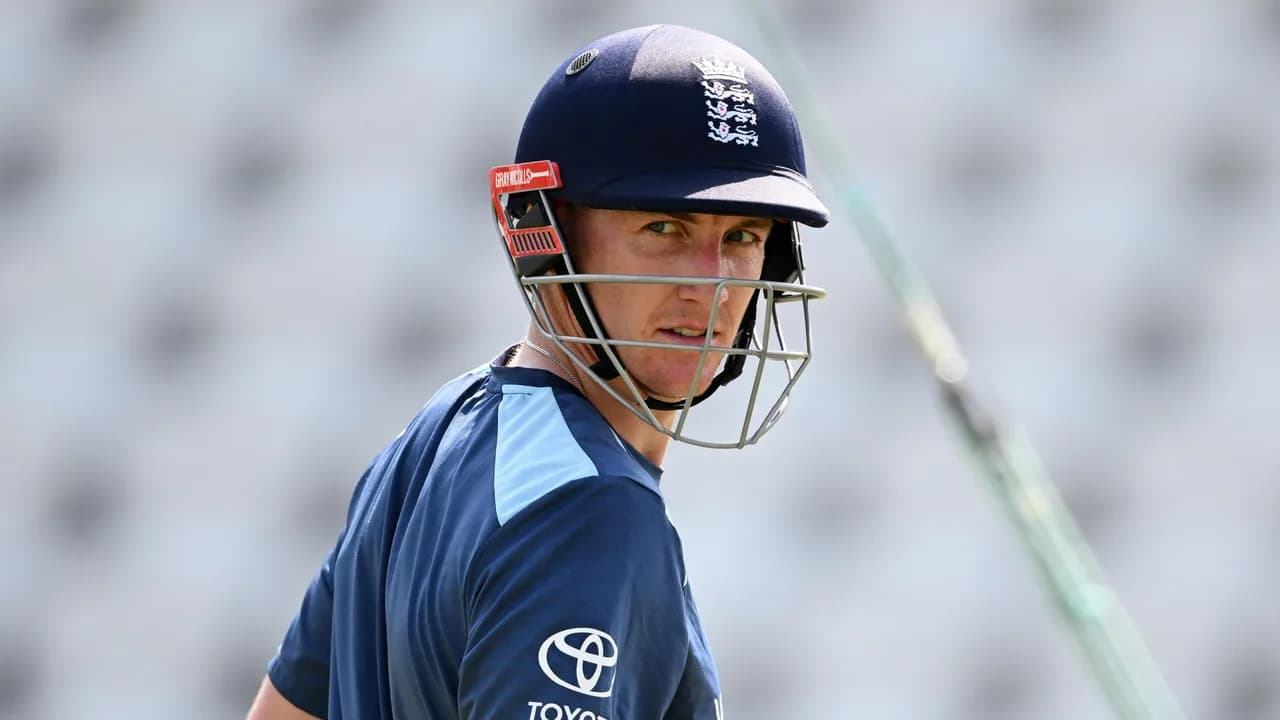
While Smith provided the granite foundation, it was Travis Head who delivered the knockout blows that shattered English morale. Coming in after a brief flurry of wickets, Head counter-attacked with breathtaking ferocity. He took a particular liking to the veteran James Anderson, driving and pulling with disdain to race to a 73-ball fifty. His intent was clear: to seize the initiative back from England and never let it go.
Former Australian captain Ricky Ponting, commentating for Sky Sports, captured the moment perfectly: "That's the Travis Head we know. He doesn't just settle in; he imposes himself. That hour of play has taken the game completely away from England." Head’s innings was a blend of brutal power and elegant strokeplay, his 163 coming from just 174 balls and including 25 fours and a six.
Smith's Surgical Century
At the other end, Steve Smith was compiling a very different, but equally devastating, masterpiece. Where Head was a hurricane, Smith was a precision laser. He meticulously dissected the English attack, working the ball into gaps with an almost robotic efficiency. His 32nd Test century, his 12th against England, was a testament to his insatiable appetite for runs in Ashes cricket.
Smith’s knock was not without its moments of fortune—he was dropped on 42 by a diving Joe Root at slip—but his focus never wavered. He reached his hundred with a classic flick through mid-wicket, celebrating with a subdued raise of the bat, the job not yet done. His partnership of 179 with Head for the fourth wicket was the defining passage of the match, turning a precarious position into one of utter dominance.
England's Bowling Despair
For England, the day was a gruelling exercise in damage limitation that ultimately failed. Their much-vaunted 'Bazball' ethos looked powerless on a flat pitch against two batsmen in supreme form. The lack of a genuine pace threat in the absence of an injured Ollie Robinson was glaring, and the workload on veterans Stuart Broad and James Anderson told as the day wore on.
The problems were multifaceted:
- Lack of Penetration: The bowling lacked consistent menace, with too many boundary balls offered to both batsmen.
- Missed Opportunities: The dropped catch off Smith was a pivotal moment England could ill afford.
- Tactical Confusion: Fields often seemed reactive rather than proactive, unable to build pressure for sustained periods.
England captain Ben Stokes cut a forlorn figure at times, searching for answers that weren't there. Speaking at the close, he conceded the difficulty of the day: "When you come up against world-class players who get in on a wicket like that, it's tough. We've just got to keep trying to find a way."
The Mountain Ahead for England
With a lead of 377 and Smith still at the crease, Australia will look to add a few more quick runs on the fourth morning before unleashing their potent pace attack on an English batting lineup that has shown profound fragility throughout the series. The prospect of Mitchell Starc and Pat Cummins charging in with a new ball and nearly 400 runs to play with is a daunting one.
England's task is not just historically difficult; it appears virtually impossible. No team has ever successfully chased more than 263 to win a Test at The Oval. To salvage a drawn series, they would need to complete the highest successful run-chase in their Test history. Given their collapses at Headingley and Lord's, few outside the most ardent believers give them a chance.
A Series Sealed by Key Moments
This final day of Australian dominance served as a microcosm of the entire series. Where England had moments of thrilling brilliance—Stokes at Lord's, Wood at Headingley—Australia displayed relentless, clinical efficiency at the crucial junctures. The tourists won the key sessions in Manchester before the rain intervened, and have now delivered the knockout punch in London.
The contributions of Smith and Head on day three underscored a decisive difference between the sides: Australia's middle-order firepower. While England relied heavily on their openers and Stokes, Australia saw vital runs from Head, Smith, and Mitchell Marsh throughout the series, often rescuing or accelerating the innings exactly when needed.
Conclusion: Ashes Retained, Victory Assured
As stumps were drawn, the Australian camp was a picture of quiet satisfaction. They had weathered the 'Bazball' storm, adapted superbly, and were now on the brink of a famous away Ashes victory. For Pat Cummins, it would cement his legacy as a captain who delivered the ultimate prize on English soil.
Steve Smith, speaking after his unbeaten century, summed up the professional mindset: "It was nice to spend some time out there and build a partnership with Heady. The goal now is to come out tomorrow, get a few more, and then have a crack at them. We're in a very good position."
For England, the dream of a series-winning comeback is over. The final two days at The Oval will now be a battle for pride, a final examination of their methods against an Australian side that has, once again, proven itself to be the more complete and resilient team. The Ashes urn, retained at Old Trafford, will now be heading back to Australia, accompanied by a scoreline that reflects their superiority.