ADELAIDE — The dismissal of England's Jamie Smith on the second day of the fourth Ashes Test has reignited a fierce debate over the reliability of the Snickometer, with players and pundits alike calling for the technology to be "sacked" from the Decision Review System (DRS) arsenal.
Smith, appearing composed on 31, shouldered arms to a delivery from Australian quick Pat Cummins that jagged back sharply. There was a sound as the ball passed the bat, prompting a vehement appeal from the Australians. Umpire Rod Tucker remained unmoved, but Australia immediately reviewed. UltraEdge, the real-time component of the Snickometer, showed a clear spike as the ball passed the bat's edge, and Smith was given out. Replays, however, told a more complex story.
The controversy lies in the Snickometer's forensic audio-visual sync, which is used to confirm UltraEdge's initial spike. This slower, frame-by-frame analysis appeared to show the spike occurring *after* the ball had passed the bat, suggesting the noise may have come from the bat hitting the pad or the ground. Former England captain Michael Vaughan, commentating at the time, voiced the growing frustration: "That is not out. The spike is after the ball. Snicko needs to be sacked. It's causing more problems than it solves."
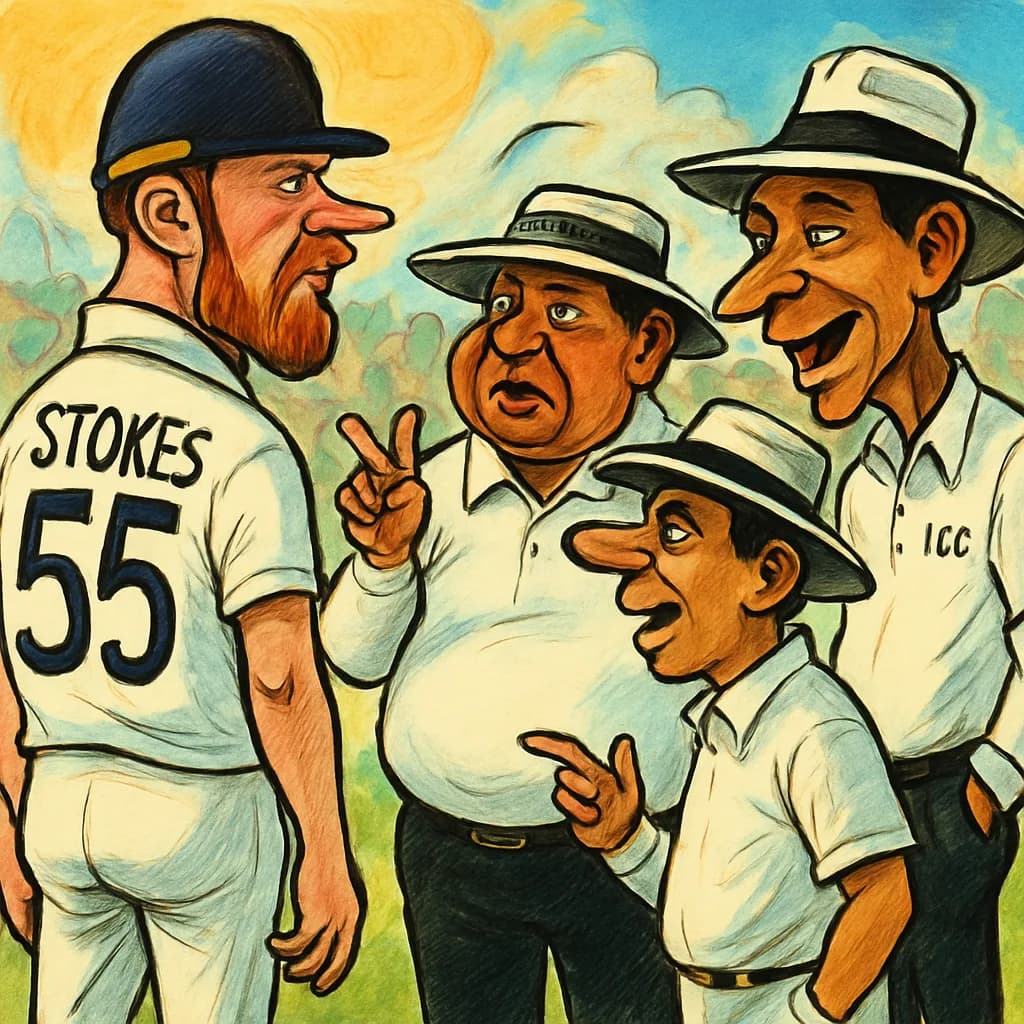
Smith walked off visibly aggrieved, and the England camp's distrust of the technology, simmering since Jonny Bairstow's contentious stumping at Lord's last summer, has now boiled over. England captain Ben Stokes, in his post-day press conference, was measured but pointed: "We've seen a few decisions this series where the technology has left everyone confused. When players are losing faith in the process, it's a serious issue for the game."
The Anatomy of a Controversial Dismissal
To understand the fury, one must dissect the two-stage DRS audio process. UltraEdge, which uses microphone arrays in the stumps, provides an instant graphic on broadcast. The separate Snickometer process is a delayed, forensic tool that marries super-slow-motion video with a sensitive audio waveform to pinpoint the exact source of a noise. The ICC's protocol states that the two must align for a conclusive "out" decision.
In Smith's case, the alignment was anything but clear. The key points of contention were:
- The Visual Gap: High-definition side-on replays seemed to show a visible gap between bat and ball at the moment the UltraEdge spike was registered.
- The Audio Delay: The Snickometer waveform spike appeared several frames later, coinciding with the bat hitting the front pad.
- Lack of Deflection: There was no visible deviation on the Hot Spot camera, though its reliability has also been questioned in recent years.
Third umpire Richard Illingworth, tasked with making the final call, was faced with conflicting evidence. The clear UltraEdge spike on the real-time feed is typically given significant weight. Speaking off the record, a source close to the umpiring team suggested the decision was "line-ball," but the protocol forced a reliance on the technology's primary indicator. "When UltraEdge shows that definitive a spike, you have to go with it, even if the secondary check looks messy," the source said.
A Growing Catalogue of Distrust
This incident is not isolated. It follows a pattern of DRS controversies in recent Ashes history that have eroded player confidence:
- Lord's 2023: While not a Snicko issue, Bairstow's stumping highlighted how technology protocols can override the "spirit" of the game.
- Manchester 2023: Australia's Mitchell Marsh was given out caught behind off a similar, debatable Snickometer trace.
- Brisbane 2021: England's Joe Root survived a review where Snicko showed a flat line despite a loud noise.
The core issue, according to audio engineers consulted for this article, is the sensitivity of the microphones and the challenge of syncing audio sampled at thousands of times per second with 100-frame-per-second video. "You're dealing with microseconds," explained Dr. Alistair McMillan of SportsTech Analytics. "A sound from the pad can travel through the bat and be picked up a fraction later. The system is designed to filter this, but in a chaotic, high-impact moment, absolute certainty is elusive."
This scientific uncertainty is lost in the binary "out/not out" outcome of a review. Australian great Shane Warne long argued for the removal of audio evidence, advocating for a return to Hot Spot and the naked eye. His former colleague, Isa Guha, echoed the sentiment on broadcast: "If the technology isn't definitive, we're better off without it. The 'umpire's call' margin for LBW is accepted. Why can't we have a 'benefit of the doubt' standard for edges?"
The Way Forward for DRS
The International Cricket Council (ICC) has consistently defended the accuracy of its DRS technology, citing a success rate above 96%. However, that statistic measures whether the technology overturned the on-field call correctly *according to its own parameters*, not whether the decision was objectively right. The Smith dismissal exposes the flaw in this logic—the technology itself became the contested evidence.
Calls for reform are growing louder. Proposals being discussed in media and former player circles include:
- Removing Real-Time UltraEdge: Only use the delayed, forensic Snickometer sync for all reviews, accepting a slower process for greater accuracy.
- Introducing a "Clear Evidence" Threshold: If the forensic Snicko is not perfectly aligned, the on-field decision stands.
- Re-integrating Hot Spot: Invest in improving the thermal imaging technology to provide a mandatory second visual check.
An ICC spokesperson stated, "The DRS is under constant review by our Cricket Committee. We note the concerns raised during the Adelaide Test and will examine all available data from the incident as part of our ongoing evaluation. The system's goal is to increase the number of correct decisions, and we remain committed to refining the tools available to the umpires."
For now, the Ashes series moves on, but the shadow of Adelaide lingers. Jamie Smith's dismissal may have been just one wicket in a long match, but it has struck at the heart of cricket's relationship with technology. When players like Ben Stokes and voices like Michael Vaughan question the fundamental tools of adjudication, the sport faces a crisis of credibility. The Snickometer, designed to eliminate doubt, has instead become its greatest source. As the controversy continues, the pressure on the ICC to act—to either fix it, explain it unequivocally, or remove it—has become as intense as the battle for the urn itself.