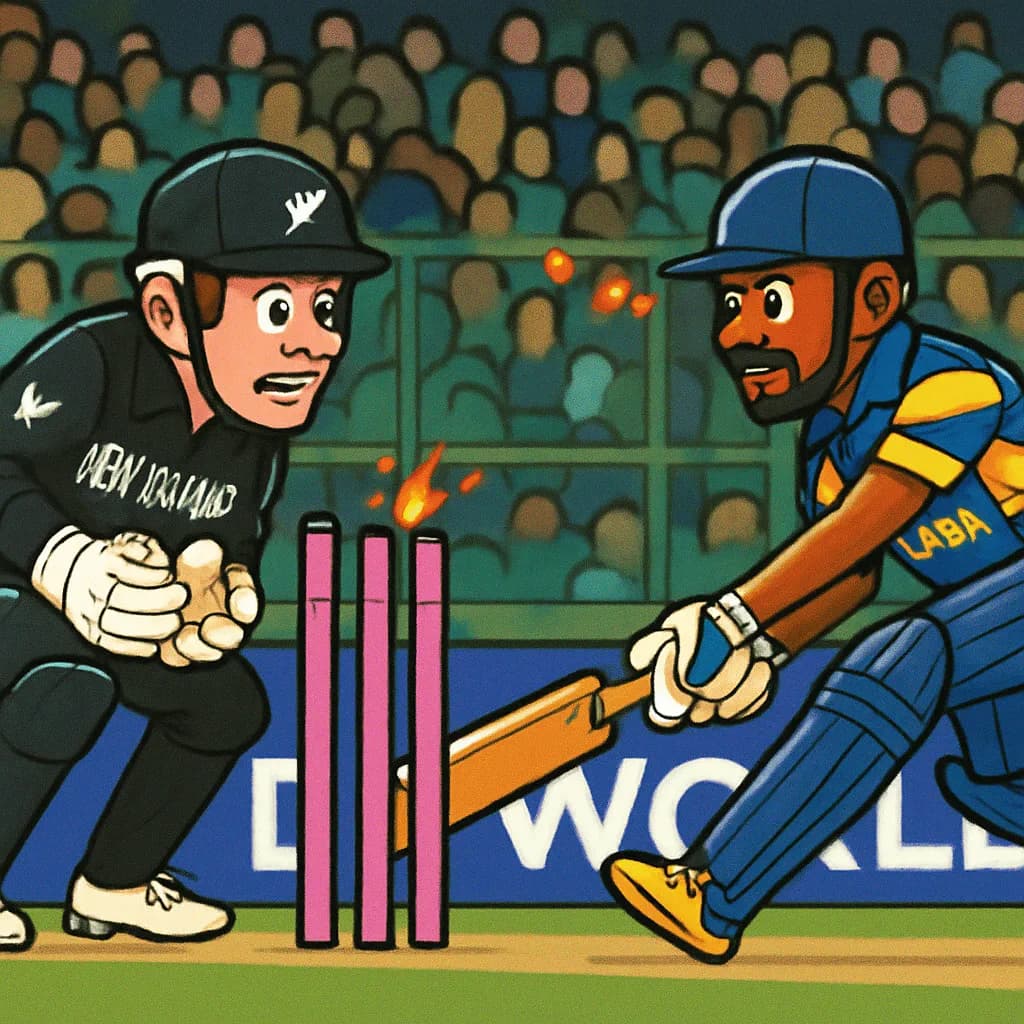
COLOMBO — Co-hosts Sri Lanka's T20 World Cup campaign came to a shuddering and premature halt on Wednesday night, as a catastrophic batting collapse saw them slump to a 61-run defeat against a clinical New Zealand side at the R. Premadasa Stadium. The result, in front of a stunned and ultimately silent home crowd, mathematically eliminated the 2014 champions from the tournament.
Needing a victory to keep their faint hopes of progression alive, Sri Lanka's chase of New Zealand's formidable 187 for 7 disintegrated from a promising 70 for 1 in the ninth over to a paltry 126 all out in the 19th. The dramatic implosion, losing nine wickets for just 56 runs, encapsulated a tournament of profound batting frailty for the Lankan Lions, who now exit their own party at the first hurdle.
A Promising Start Unravels in Dramatic Fashion
After winning the toss and opting to field, Sri Lanka's bowlers initially contained a powerful New Zealand top order. Maheesh Theekshana was particularly frugal, conceding just 25 from his four overs. However, the innings was transformed by a blistering 48-run partnership from just 19 balls between Glenn Phillips (31 off 17) and the irrepressible Daryl Mitchell. Mitchell, who finished unbeaten on a masterful 66 from 43 deliveries, provided the late-innings pyrotechnics, expertly targeting the square boundaries and punishing any lapse in length.
"We knew it was a good wicket, and the plan was to build a platform and then really go hard at the back end," Mitchell said in the post-match presentation. "The boys up top did a great job, and then me and Philly [Phillips] just tried to keep the momentum going. It was about staying calm and picking our moments."
The 187-run target was challenging but by no means insurmountable on a true Colombo surface. Sri Lanka's reply began brightly, with Pathum Nissanka (15 off 10) and Kusal Mendis (22 off 17) finding the boundary regularly. The early loss of Kamindu Mendis was a setback, but at 70 for 1 with set batsmen at the crease, the required rate was under control and the stadium was buzzing with anticipation.
The Collapse: A Catalogue of Catastrophe
The turning point arrived in the ninth over, bowled by left-arm spinner Mitchell Santner. In a sequence that broke the game open, Santner removed both set batters: Kusal Mendis holed out to long-on, and two balls later, the dangerous Sadeera Samarawickrama was trapped lbw for 4. The double-strike applied immediate pressure, which the middle order proved utterly incapable of withstanding.
What followed was a procession, a stark exhibition of poor shot selection, technical deficiency against spin, and mounting panic. From overs 9 to 15, Sri Lanka lost a wicket in every single over except one. The New Zealand spinners, Santner (2 for 22) and Ish Sodhi (3 for 21), exploited the deteriorating pitch and the batsmen's fragile confidence with ruthless efficiency. The key failures were stark:
- Charith Asalanka (1 off 5): Chipped a simple catch to cover off Sodhi, attempting to force the pace.
- Wanindu Hasaranga (7 off 8): The captain, burdened by the team's plight, skied a slog-sweep to deep mid-wicket.
- Angelo Mathews (4 off 7): The experienced head, run out after a disastrous mix-up with Dasun Shanaka.
The run-out of Mathews symbolized the chaos. A firm push to cover led to hesitation, then a desperate sprint, and a direct hit from Glenn Phillips that found Mathews well short. It was a moment of self-inflicted damage from which there was no recovery.
Post-Mortem: Questions for Sri Lankan Cricket
The defeat, following an opening loss to South Africa and a scrappy win over Bangladesh, confirms Sri Lanka's earliest exit from a T20 World Cup since 2021. The post-match inquest will be severe. Captain Wanindu Hasaranga cut a desolate figure, his frustration palpable. "As a batting unit we totally collapsed. That's the main reason we lost the game," he stated bluntly. "After the first ten overs, we were in a good position. We lost too many wickets in the middle overs. We have to think about that as a batting unit."
The statistics paint a damning picture of Sri Lanka's tournament. Across their three matches, no batsman scored a fifty. The highest individual score was Kusal Mendis's 43 against Bangladesh. The middle order, touted as a strength, consistently failed. The team's over-reliance on Hasaranga's all-round brilliance and the mystery spin of Theekshana was exposed when the batting repeatedly failed to post or chase competitive totals.
New Zealand captain Kane Williamson, while pleased with his team's comprehensive performance, acknowledged the pressure of a must-win game. "It was a good all-round performance. The surface was a little tricky, but the boys adapted well. Daryl [Mitchell] was outstanding, and the spinners were crucial in the middle," he said. The victory puts the Black Caps firmly in control of Group D and on the brink of the Super Eight stage.
Looking Ahead: An Empty Home Stretch
For Sri Lanka, the remaining group match against the Netherlands is now a dead rubber, a painful formality to be played out in front of disillusioned fans. The early exit represents a significant financial and reputational blow for Sri Lanka Cricket, which had hoped a deep run by the home side would galvanize public interest and fill stadiums throughout the tournament's Caribbean leg.
The collapse against New Zealand was not an isolated incident but the culmination of systemic batting issues that have plagued the team for months. It raises urgent questions about domestic structure, player development against quality spin—ironically, a traditional strength—and the mental fortitude of a transitioning squad. The inquest will be long, and the road to redemption longer.
As the Colombo crowd filed out quietly long before the final wicket fell, the sense of opportunity lost was overwhelming. A World Cup on home soil, a chance to inspire a nation, evaporated in a haze of poor shots and crumbling resolve. The task now is not just to rebuild a T20 team, but to restore faith in a cricketing culture that once thrived on defying the odds, not succumbing to them.