
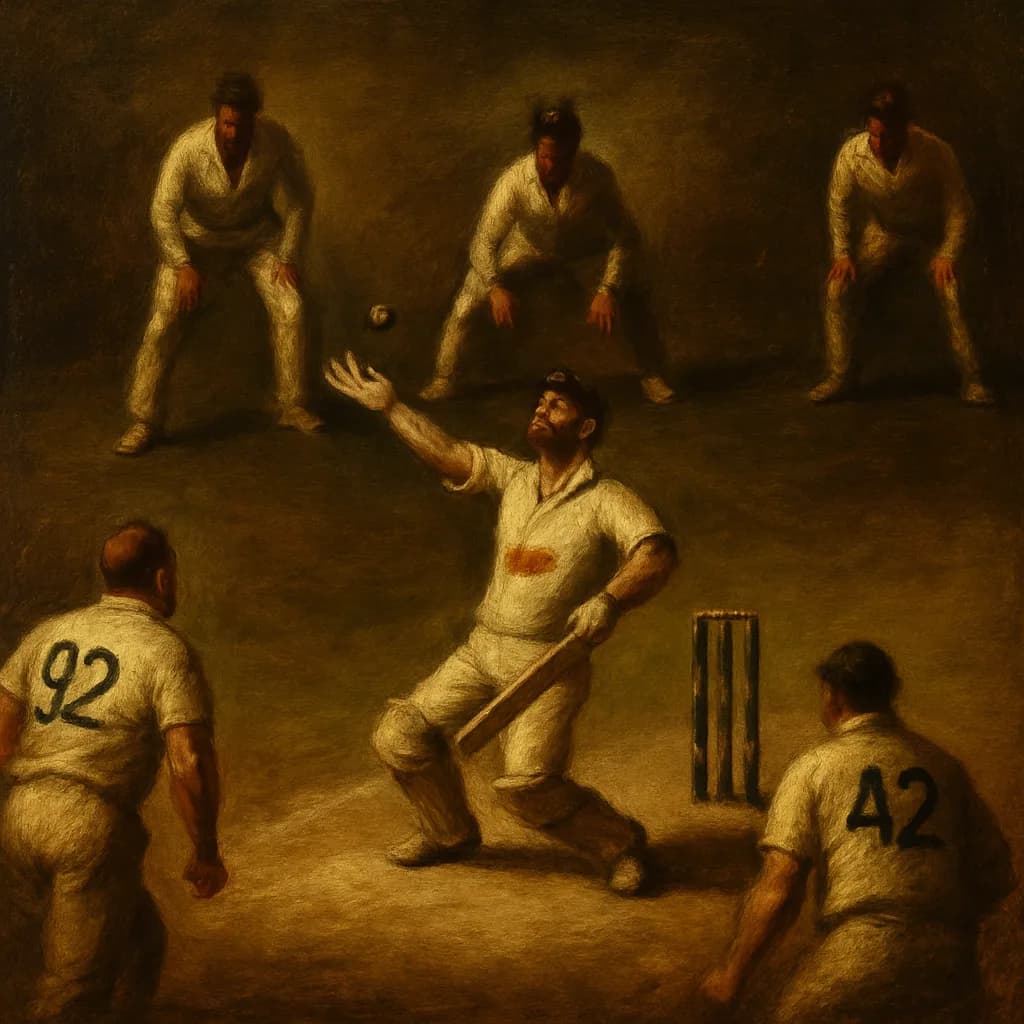
LONDON — In the aftermath of a thrilling Ashes Test at the Melbourne Cricket Ground (MCG) in December 2021, the International Cricket Council (ICC) delivered a verdict that sparked as much debate as the on-field action. The pitch used for the match was rated ‘unsatisfactory’, triggering a demerit point for the iconic venue. But what does this rating actually mean, who decides it, and how does the entire system function? BBC Sport's Ask Me Anything team delves into the often-misunderstood world of ICC pitch and outfield monitoring.
The ICC Pitch and Outfield Monitoring Process is a formal system designed to maintain minimum standards for international cricket playing surfaces. Its core purpose is to ensure a fair contest between bat and ball, safeguarding the spirit of the game and the safety of players. The system applies to all ICC full member nations and is overseen by the ICC’s General Manager of Cricket, Wasim Khan. As the ICC states, the objective is to "identify and eliminate substandard pitches and outfields worldwide."
The Match Referee's Crucial Role
At the heart of the process is the ICC match referee. This independent official, appointed for every Test, One-Day International (ODI), and Twenty20 International (T20I), is responsible for submitting a report to the ICC within 14 days of the match's conclusion. This report includes a rating for both the pitch and the outfield. The referee does not work in isolation; they consult with the two on-field umpires and the captains of both teams before finalizing their assessment. This collaborative approach is meant to incorporate multiple expert perspectives on how the surface behaved over the course of the game.
The Six-Tier Rating Scale
The ratings themselves are not vague impressions but are tied to specific, albeit broad, criteria. The match referee chooses from one of six possible ratings for the pitch:
- Very Good: The pitch provides an excellent balance between bat and ball, rewarding both disciplines.
- Good: A standard pitch that offers a fair contest, perhaps with periods of advantage shifting between batters and bowlers.
- Average: The pitch is functional but may lack consistent pace, bounce, or turn, limiting strokeplay or bowler effectiveness.
- Below Average: The pitch falls short of the expected standard, offering excessive assistance to either batters or bowlers for much of the match.
- Poor: The pitch severely compromises the balance between bat and ball, making it unfit for international cricket.
- Unsatisafactory: This rating is primarily reserved for outfields that are deemed dangerous or unfit for play, but can apply to pitches in extreme cases.
What Makes a Pitch 'Poor' or 'Unsatisfactory'?
The ICC provides guidelines for what constitutes the lowest ratings. A pitch is likely to be rated ‘Poor’ if it exhibits one or more of the following characteristics:
- Excessive seam movement or turn from the first day, preventing a normal contest.
- Excessive unevenness of bounce, posing a risk of injury to batters.
- Excessive slowness or liveliness, making the match heavily skewed in favour of one discipline.
The Consequences: Demerit Points and Bans
A rating is more than just a report card; it carries tangible consequences. If a pitch is rated ‘Below Average’, the venue receives one demerit point. A ‘Poor’ rating results in three demerit points, and an ‘Unsatisfactory’ outfield rating brings one demerit point. These demerit points remain active for a rolling five-year period. The stakes are high: if a venue accumulates five demerit points, it faces a 12-month suspension from hosting international cricket. Accumulating ten demerit points leads to a 24-month suspension.
This system was notably applied to the pitch at the Wanderers Stadium in Johannesburg during a Test between South Africa and India in January 2018. Match referee Andy Pycroft rated the pitch ‘Poor’, citing dangerous and unpredictable bounce. He stated in his report, "The pitch prepared for the final Test was a poor one. It had excessively steep and unpredictable bounce, and excessive seam movement." The venue received three demerit points as a result.
Controversy and Subjectivity
The system is not without its critics. The primary challenge is the inherent subjectivity in judging a cricket pitch. What one expert sees as a ‘Good’ surface offering turn for spinners on day four, another might view as ‘Below Average’ for offering too much assistance too early. Home advantage also plays a role; teams often prepare surfaces that suit their own strengths, which can blur the line between a shrewd tactical move and an unfit pitch. Furthermore, the process relies heavily on the outcome of the match. A pitch that produces a thrilling, three-day result might be rated more harshly than a dull, five-day draw, even if the latter was less entertaining.
The Melbourne ‘unsatisfactory’ rating was a classic example of this debate. Many pundits and fans argued that while the pitch was indeed flat, it was not dangerous, and the match itself was compelling. Critics of the rating asked, as former England captain Michael Vaughan did at the time, "If that’s unsatisfactory, what’s a good pitch? One that spins from ball one or seams around for five days?"
The Process After the Rating
Once a ‘Poor’ or ‘Unsatisfactory’ rating is given, the host national cricket board has 14 days to provide a response or appeal. The ICC then forms a panel, typically comprising the ICC General Manager of Cricket, the ICC Head of Events, and a member of the ICC’s Cricket Committee. This panel reviews the match referee’s report, any submitted footage, and the board’s response before making a final decision to either uphold, overturn, or modify the rating and the associated demerit points.
Conclusion: Balancing Act and Ongoing Evolution
The ICC pitch rating system represents a necessary, if imperfect, mechanism to uphold playing standards in international cricket. It is a balancing act between preserving the unique character of pitches worldwide—the spin of Chennai, the swing of Lord’s, the pace of Perth—and ensuring they do not become caricatures that ruin the contest or endanger players. While subjectivity will always invite debate, the structured process, the threat of demerit points, and the potential for venue bans provide a powerful incentive for curators and boards to aim for quality. As the game evolves, so too will the criteria, in a continuous effort to protect the fundamental equilibrium between bat and ball that lies at the heart of cricket’s appeal.