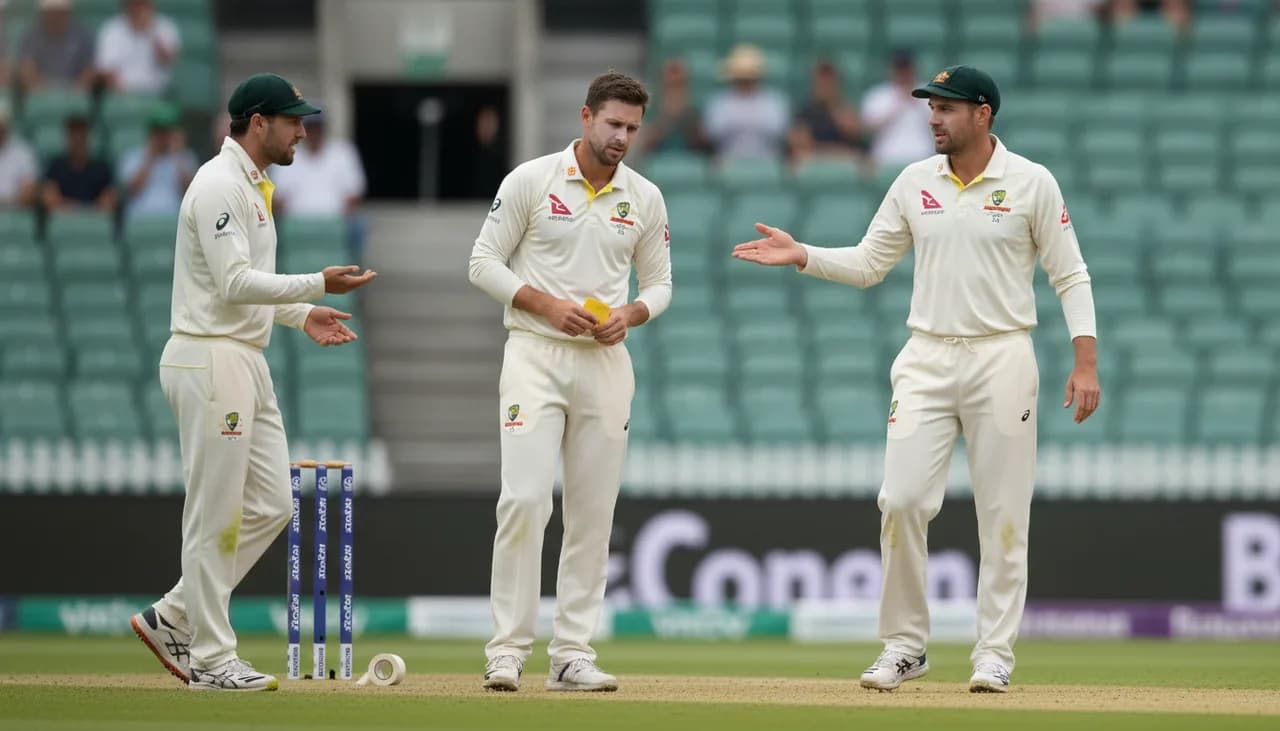
If you've been watching England play Test cricket recently, you might have noticed a series of numbers adorning the players' pristine white shirts and caps. These aren't random squad numbers like in football or rugby; they are deeply significant identifiers that connect the current squad to a rich and storied history. Our Ask Me Anything team is here to explain the meaning behind these figures, from the prestigious cap numbers to the shirt numbers that tell a story of national representation.
The Prestige of the Cap Number
The most important number for any England Test cricketer is their cap number. This is a sequential number assigned to a player upon their debut in Test cricket for England. The tradition began in 1899, and the number represents the player's place in the lineage of all those who have represented the nation in the longest format of the game. When a player receives their first England Test cap, it is physically embroidered with this number, a permanent mark of their entry into an exclusive club.
The system was formally instituted by the Marylebone Cricket Club (MCC) during the 1899 Ashes series. The very first player to be assigned a number under this new system was Johnny Briggs, who was given cap number 1. However, as this was a retrospective assignment, the honour of being the first-ever England Test cricketer belongs to James Lillywhite, who captained the first-ever Test match in 1877. The list of cap numbers has been meticulously maintained ever since, creating an unbroken thread from the pioneers of the Victorian era to the stars of the modern game.
The weight of this tradition is not lost on the players. Receiving your cap is a monumental occasion, often presented by a legendary former player. The number serves as a constant reminder of the legacy they are now a part of and the responsibility they bear. As of the time of writing, the most recent players to receive their cap numbers are part of an elite group that has surpassed the 700-mark, a testament to over 140 years of Test cricket history.
The Shirt Number: A Modern Addition
While the cap number is about history and sequence, the number on the back of the player's shirt is a more personal and modern identifier. Introduced in the late 1990s as the game became more professional and commercially aware, these are the individual squad numbers chosen by the players themselves. Unlike the cap number, which is fixed for life, a player's shirt number can, in theory, change, though most tend to stick with one number throughout their career.
These numbers often have personal significance to the player. They might be a birth date, a lucky number, or a tribute to a sporting idol. For example, the legendary all-rounder Ben Stokes wears the number 55 on his shirt. Meanwhile, a bowler like James Anderson, who holds the prestigious cap number 613, wears the shirt number 9.
This dual-number system can sometimes cause confusion for fans. A key thing to remember is:
The cap number (on the cap/blazer) is their historical debut number. The shirt number (on the back) is their personal squad number.
You will often see both numbers displayed simultaneously: the cap number on the side of their sunhat or cap, and their chosen shirt number prominently on the back of their playing jersey.
A Tale of Two Systems in Action
To fully understand the distinction, let's look at a few prominent examples from the current England setup. These players illustrate the chronological history of the cap number system alongside the personal nature of the shirt number.
James Anderson
Cap Number: 613
Shirt Number: 9
The story of James Anderson's numbers is a fascinating one. He is England's all-time leading wicket-taker and holds a very high cap number, reflecting his relatively modern debut in 2003. His shirt number, 9, is a classic bowler's number and has become synonymous with his legendary career.
Joe Root
Cap Number: 644
Shirt Number: 66
The former captain, who debuted after Anderson, has a higher cap number (644). His shirt number, 66, is believed to be a personal choice without a widely publicized story, simply becoming his identifier on the field.
Stuart Broad
Cap Number: 629
Shirt Number: 8
Another modern great, Broad debuted before Root but after Anderson, hence his cap number sits between theirs. His shirt number, 8, was another fixture of the England bowling attack for years.
Ollie Robinson
Cap Number: 695
Shirt Number: 14
As a more recent debutant, Robinson's cap number is significantly higher, approaching 700. This clearly shows his more recent induction into the Test arena compared to the established stars.
The Significance and The Legacy
For players and fans alike, these numbers are more than just decoration. The cap number is a sacred link to the past. When a new player receives a number in the 690s, they are acutely aware that they are following in the footsteps of 689 other men who have represented England in Test cricket. It’s a system that fosters a sense of continuity and respect for the game's traditions. A quote from a past England captain often rings true in dressing rooms:
"You are not just playing for yourself, but for every man who has worn that badge and that cap number before you."
The shirt number, on the other hand, allows for individual expression and brand identity. In an age of global television coverage and merchandise, it helps fans easily identify their heroes on the field. It connects the player to their supporters in a more direct, personal way. While the cap number is about the team's history, the shirt number is about the player's own story within that history.
Key Takeaways and Common Questions
To summarise, the numbers on an England Test cricketer's uniform tell two different but equally important stories. Here’s a quick bullet point guide to keep it straight:
- Cap Number: Found on the cap or blazer. Sequential, based on Test debut order. Permanent and unchangeable. Represents history and legacy.
- Shirt Number: Found on the back of the jersey. Chosen by the player. Can be changed. Represents personal identity.
- Origin: Cap numbers started in 1899. Shirt numbers started in the 1990s.
- Example: A player with cap number 650 debuted after a player with cap number 640.
A common question is whether these numbers are reused. The answer is a resounding no for cap numbers. Each is unique and retired for that specific player, forever linking them to their debut moment. Shirt numbers, however, can be reused if a player retires or is dropped from the team, though it is common for a new player to choose a different number to avoid direct comparison.
So, the next time you settle in to watch an England Test match, you can look at the players and understand the dual narrative woven into their kit. The small number on the cap is a chapter in a long and ongoing history book, while the larger number on the shirt is the unique signature of the author writing that chapter. Together, they create a rich tapestry that honours both the institution of English cricket and the individuals who bring it to life.