
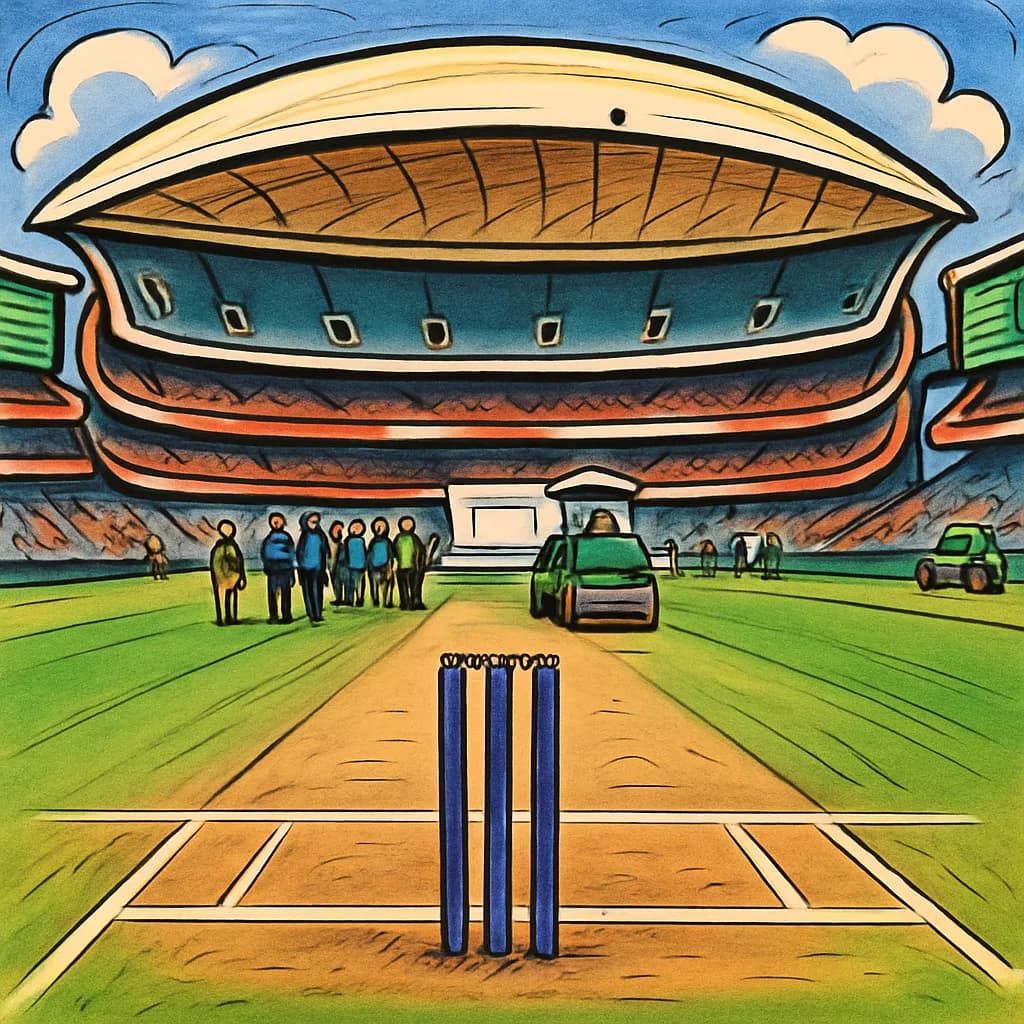
MELBOURNE — The fourth Ashes Test of the 2021-22 series at the Melbourne Cricket Ground (MCG) will be remembered as one of the most dramatic collapses in modern cricket history. In just two days, a staggering 36 wickets tumbled, with England bowled out for 68 in their second innings to lose by an innings and 14 runs. At the heart of this carnage was a seemingly simple, yet profoundly influential, factor: the amount of grass left on the pitch. In a contest where margins are measured in millimetres, the decision to leave approximately 10mm of live grass on the MCG surface proved to be the decisive element, turning a traditional batting track into a bowler's paradise and sparking intense debate about pitch preparation.
The MCG curator, Matt Page, faced a unique challenge. The pitch for the previous year's Boxing Day Test against India had been widely criticised as being too flat and unresponsive, offering little for the bowlers. Determined to produce a surface with more life and to ensure a result in the iconic Ashes contest, Page and his team made a conscious decision to leave more grass than usual. This wasn't about creating a "green mamba" typical of English conditions, but about fostering a pitch with consistent pace, bounce, and just enough seam movement to reward good bowling. As former Australian captain Ricky Ponting noted at the time, "There's certainly more grass on it than what we've seen here at the MCG for a long time."
The Science of Grass on a Pitch
To understand why 10mm of grass made such a difference, one must delve into the science of pitch preparation. A cricket pitch is a carefully curated strip of soil, and the grass covering plays multiple critical roles:
- Moisture Retention: The grass roots help bind the soil and retain moisture beneath the surface.
- Surface Protection: It protects the soil from cracking under the sun and from excessive wear.
- Ball Interaction: The grass itself directly interacts with the cricket ball's seam.
A Tale of Two Innings: The Bowlers' Revelry
The impact was immediate and brutal. Australia, batting first, were dismissed for 267—a below-par total on most MCG pitches. But England's response was catastrophic, bowled out for 185. The destroyers-in-chief were Australia's pace trio, with Pat Cummins and Mitchell Starc exploiting the conditions perfectly. The ball consistently seamed and bounced from a good length, forcing batters to play at deliveries they would normally leave. England captain Joe Root, one of the world's best, could only manage a duck in the first innings, undone by a Starc delivery that seamed away late. The pattern continued in Australia's second innings and England's final capitulation for 68, with Scott Boland writing his name into Ashes folklore with astonishing figures of 6-7 in the second innings. Boland's success was built on relentless accuracy, allowing the pitch to do the work. As he humbly put it, "I was just trying to bowl a length and hit the top of the stumps. Fortunately, a few nicked off."
The Role of Cloud Cover and Humidity
While the grass was the primary actor, atmospheric conditions played a supporting role. The two days of the match were characterised by significant cloud cover and higher humidity. This is crucial because grass retains moisture, and cloud cover prevents the sun from drying out the surface. A moist pitch with grass cover is a seam bowler's dream, as the ball retains its condition for longer, the seam stays harder, and the interaction between leather and grass is more pronounced. On a hot, sunny day, the same pitch would have dried, the grass would have wilted, and batting would have become considerably easier. The weather, therefore, amplified the effect of Page's grassy preparation, creating a "perfect storm" for bowling.
The Aftermath and the "Pitch Prep" Debate
The match, lasting only 1,072 balls, reignited the perennial debate about home advantage and pitch preparation. Critics argued the surface was overly favourable to the bowlers, compromising the balance between bat and ball. England's then-coach, Chris Silverwood, faced questions about whether the pitch was suitable for Test cricket. However, many pundits and former players defended the surface, arguing that it simply rewarded high-quality seam bowling and exposed technical deficiencies. The pitch did not demonstrate excessive variable bounce or dangerous lateral movement; it required batters to play with soft hands, precise footwork, and immense concentration—core Test match skills. The drama also served as a potent reminder that Test cricket thrives on variety. As Australian great Glenn McGrath stated, "We don't want every pitch the same. We want some that spin, some that seam, some that are flat. This is Test cricket."
A Lasting Legacy in Pitch Management
The 2021 MCG Ashes Test has become a case study in pitch curation. It demonstrated that subtle changes—a few extra millimetres of grass, combined with specific weather—can alter the fundamental character of a game. For curators worldwide, it underscored the fine line between preparing a "sporting" pitch and one that tips too far in one direction. In the years since, the MCG has returned to producing more traditional, batsman-friendly surfaces, but the ghost of that grassy deck lingers. It proved that in the high-stakes theatre of the Ashes, the battle isn't just between two teams of eleven players; it's also a contest between bat and ball, heavily influenced by the 22 yards of carefully managed turf prepared by the curator. The 10mm of grass left at the MCG wasn't an error; it was a deliberate gamble that produced a whirlwind of a Test match, a stark lesson in cricket's environmental nuances, and an enduring answer to the question: what difference does grass make? All the difference in the world.