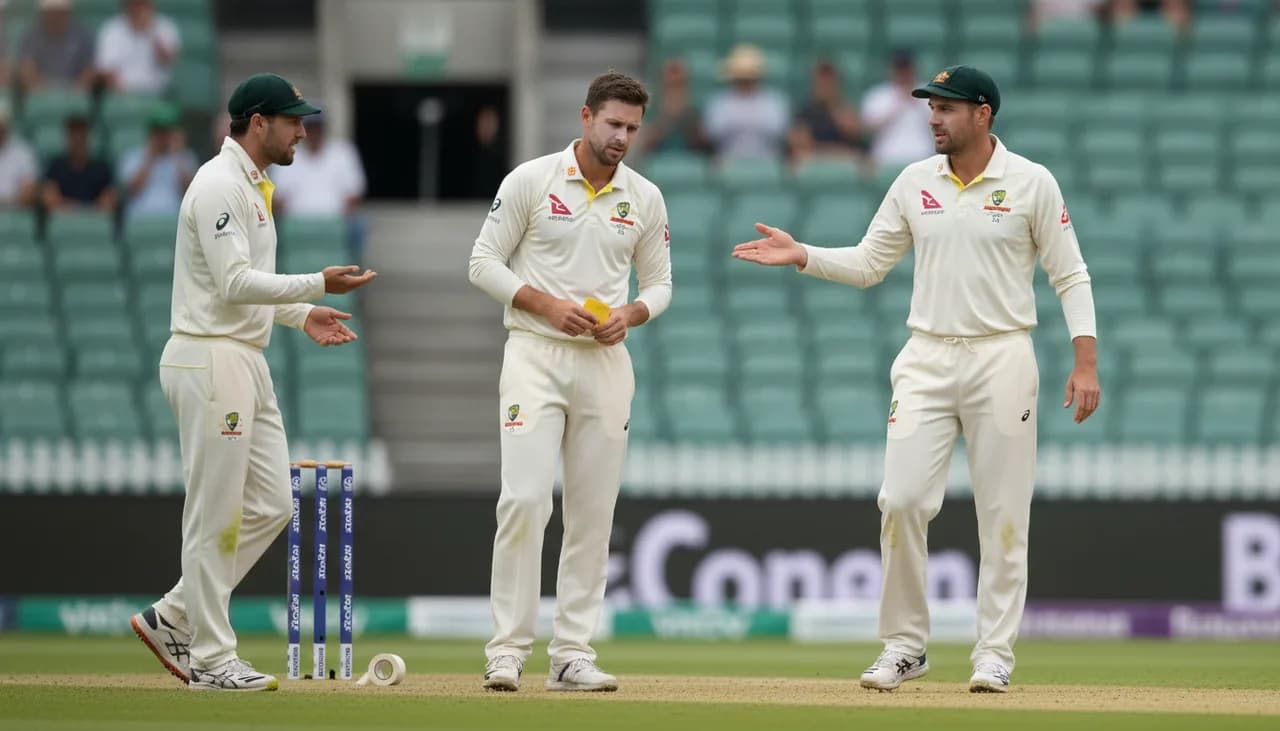

In March 2018, during the third Test match against South Africa in Cape Town, the Australian men's cricket team was involved in an incident that would become one of the most infamous episodes in the sport's history: the sandpaper scandal.
The Moment of Discovery
The scandal erupted on the third day of the Test, on March 24, 2018. Television cameras focused on Australian fielder Cameron Bancroft, who was seen rubbing the ball with a small, yellow object. When the on-field umpires, Nigel Llong and Richard Illingworth, approached him to inquire, Bancroft quickly shoved the object down his trousers. He then showed the umpires a black sunglasses cloth, attempting to deceive them about what he had been using.
The broadcasters, however, had captured the initial act clearly. As the footage was replayed, commentators and viewers alike could see it was not a cloth, but something more abrasive. Bancroft and then-captain Steve Smith were later summoned to a press conference during the lunch break, where they offered a clumsy and unconvincing explanation.
Smith admitted the team's "leadership group" had knowledge of the plan, a statement that would prove catastrophic. He stated, "The leadership group knew about it. We spoke about it at lunch and I'm not proud of what's happened. It's not within the spirit of the game."
What is Ball Tampering?
To understand the gravity of the scandal, one must understand why players would tamper with the ball. In cricket, the condition of the ball is paramount. Bowlers strive to achieve "reverse swing," a phenomenon where an older, rougher ball can move unpredictably in the air, making it extremely difficult for batters to play.
This is typically achieved through legal means—polishing one side on the trousers while allowing the other to naturally wear. Illegally altering the ball's condition, however, is considered a serious breach of the game's laws and spirit. While minor infractions have occurred throughout cricket's history, the premeditated use of sandpaper in Cape Town was seen as a blatant and systematic attempt to cheat.
The Fallout and Punishments
The backlash was immediate and ferocious, from both the international cricket community and a shocked Australian public, who hold their cricket team to a high standard of conduct. Cricket Australia launched an urgent investigation, and the consequences were severe.
Captain Steve Smith and vice-captain David Warner, identified as the architects of the plan, were handed 12-month bans from international and domestic cricket. Cameron Bancroft, who executed the plan, received a 9-month ban. In a move that underscored the depth of the crisis, Smith and Warner were also banned from ever holding leadership positions again.
The sanctions went beyond suspensions. The trio faced immense public shaming and a significant financial hit. The fallout also claimed the jobs of coach Darren Lehmann, who resigned, and high-performance manager Pat Howard. The reputation of Australian cricket, built on a tough but fair "play hard, play fair" ethos, was left in tatters.
A Culture Problem Exposed
In the aftermath, the scandal was framed not as a one-off error in judgment, but as a symptom of a rotten team culture. The Australian team had long been known for its aggressive, win-at-all-costs mentality, often crossing the line into outright hostility, a style they called "mental disintegration."
The sandpaper incident was seen as the logical endpoint of this culture. A review commissioned by Cricket Australia, known as the Longstaff Review, concluded that the organisation itself was partly to blame, having created a culture where players felt that "winning without counting the cost" was the paramount objective.
The report stated, "Australian cricket has lost its balance... and stumbled badly. The reputation of the game of cricket, as played by men, has been tainted. The Australian public... feels let down."
Key Figures and Their Roles
Steve Smith (Captain)
As captain, Smith bore the ultimate responsibility. His admission that the "leadership group" was involved was a devastating blow to his credibility and authority. He was widely criticised for failing in his primary duty to protect the spirit of the game.
David Warner (Vice-Captain)
Warner was identified by the investigation as the senior player who instructed Bancroft on how to tamper with the ball and provided the sandpaper. He was seen as the instigator and was deemed by Cricket Australia to be responsible for the "development of the plan."
Cameron Bancroft (Player)
The junior player in the side, Bancroft was the one who carried out the act on the field. While he received a slightly shorter ban, his career was put on hold, and he became the visible face of the cheating for millions of viewers around the world.
The Aftermath and Legacy
The scandal forced a painful but necessary period of introspection for Australian cricket. New captain Tim Paine and coach Justin Langer were tasked with the monumental job of rebuilding the team's culture and reputation, focusing on humility and respect.
The players returned from their bans, but their careers were forever marked. Steve Smith and David Warner eventually fought their way back into the national team and have since scored heavily, but the scandal remains a defining part of their legacies. Cameron Bancroft's international career never fully recovered.
The lasting impact of the sandpaper scandal can be summarised in several key points:
- It led to a fundamental reset of the Australian cricket team's culture, moving away from the aggressive "winning without counting the cost" model.
- It resulted in some of the harshest sanctions ever handed down for a breach of the sport's spirit, setting a new precedent.
- It created a global conversation about the spirit of cricket and the immense pressure on modern athletes to win.
The scandal became a cautionary tale, a stark reminder that how you play the game matters just as much as the result. As one commentator put it, the sandpaper scandal was the moment Australian cricket "lost its soul, but perhaps found its conscience."