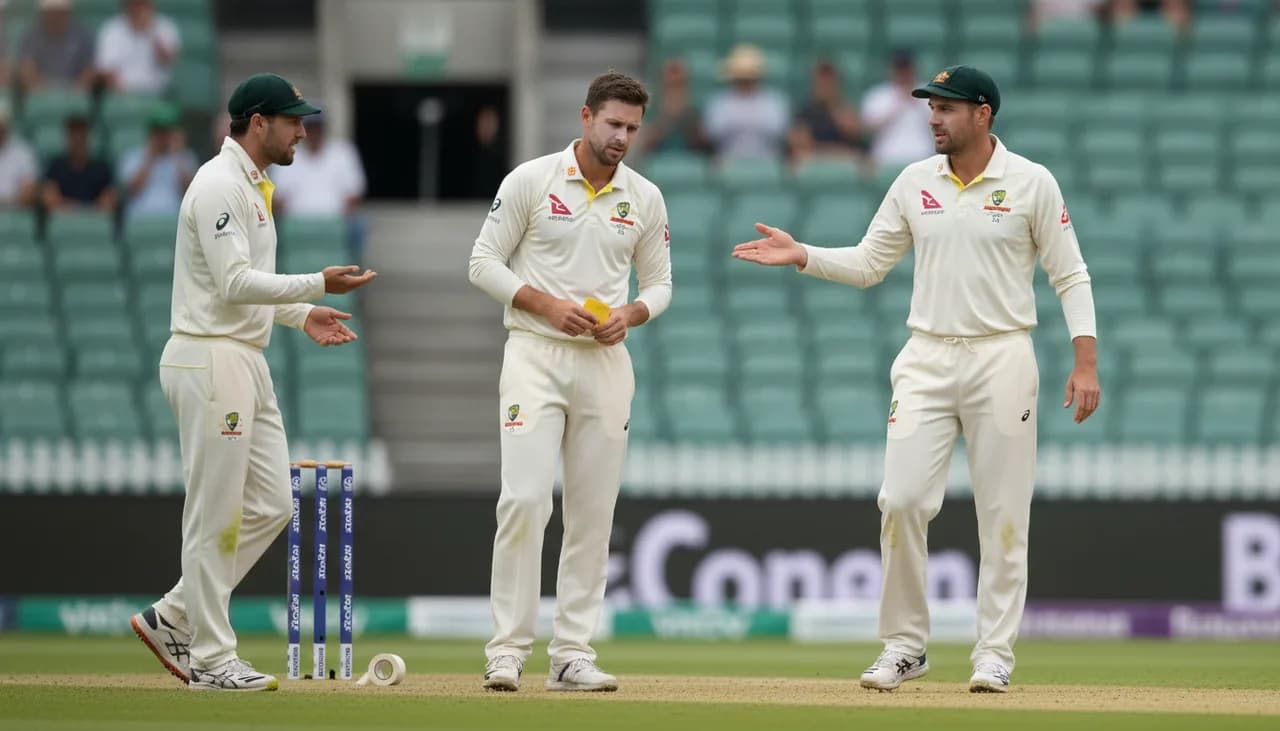
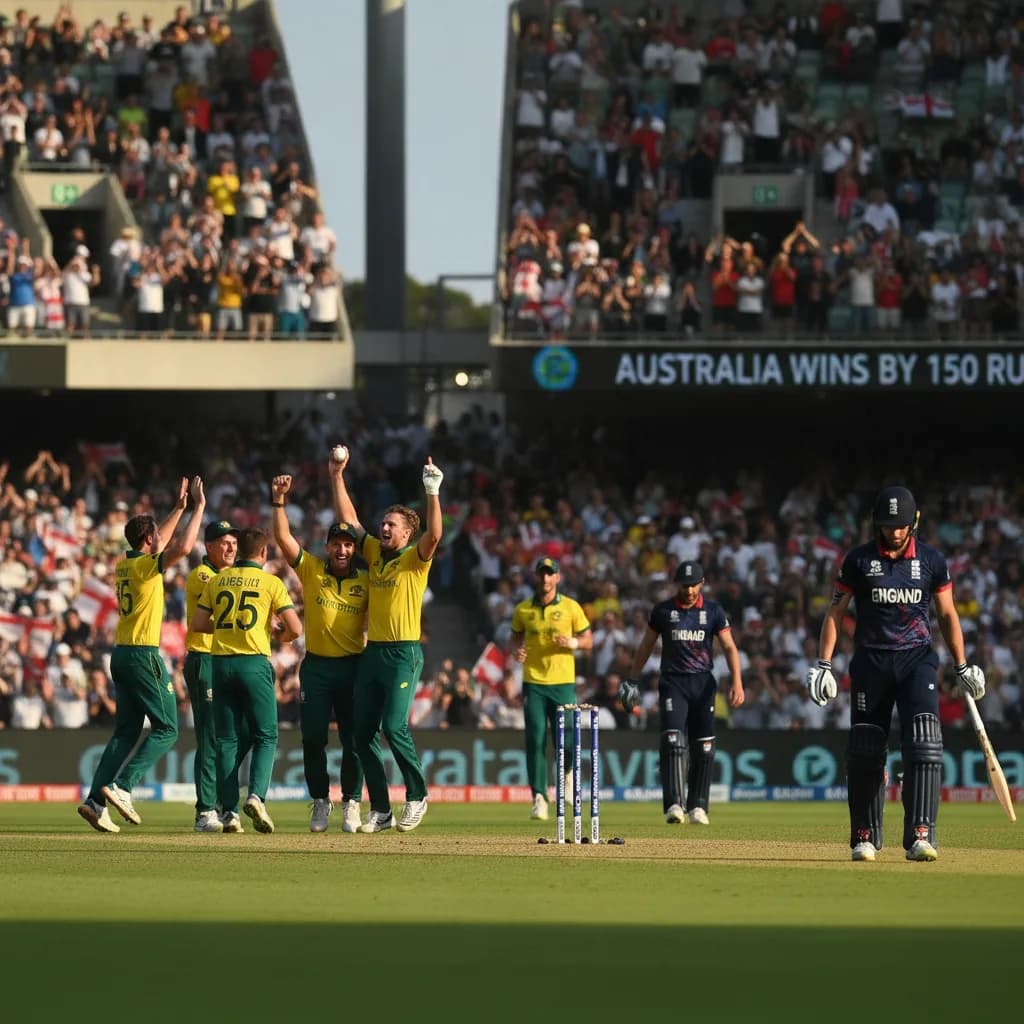
LONDON — For any cricket fan tuning into the Ashes from the Northern Hemisphere, a peculiar sight often causes a double-take. On the iconic grounds of the Melbourne Cricket Ground or the Sydney Cricket Ground, the scoreboard displays the batting team's total on the *right* and the wickets lost on the *left*. To those accustomed to the standard "runs-for/wickets-against" format, it looks, for lack of a better word, backwards.
This is not a glitch in the matrix nor a deliberate attempt to confuse visiting teams. It is, in fact, a long-standing tradition in Australian cricket, one deeply rooted in the sport's scoring history. As the BBC Sport's Ask Me Anything team often explains, the reason is elegantly simple: the scoreboard is telling a story, and in Australia, they read it from left to right as "wickets for, runs scored."
The Historical Ledger: A Page from the Scorer's Book
To understand the Australian scoreboard, one must journey back to the origins of cricket scoring itself. Before digital screens and light-emitting diodes, scoreboards were manual, operated by attendants who would place individual numbers and letters on a board. More importantly, the format was directly lifted from the official scorer's book. In this ledger, the score is traditionally recorded in columns. The left-hand column lists the fall of wickets (the number of batsmen out), and the right-hand column records the total runs at that point.
A cricket historian might note, "The Australian method is the most literal translation of the scorebook onto the big screen. It's a direct, chronological readout of the innings' progression." For example, if you see "3/75" on an Australian scoreboard, it is read as "three for seventy-five," meaning the batting side has scored 75 runs for the loss of 3 wickets.
A Commonwealth Divide: Australia vs. The World
This practice creates a clear cricketing divide. While Australia and, to a lesser extent, South Africa have historically favoured the "wickets-for/runs" format, the majority of the cricketing world, including England, India, Pakistan, and the West Indies, uses the "runs-for/wickets-against" system. In those countries, "75/3" means exactly the same thing—75 runs for 3 wickets—but the visual presentation is inverted.
The difference often leads to momentary confusion for players and fans alike. A commentator might quickly clarify for a global audience, "And for those watching abroad, that's 150 for 4 on the Australian scoreboard." This divergence isn't governed by any international cricketing law but is purely a matter of entrenched local convention.
Why Did This Particular Tradition Stick in Australia?
There is no single documented decree that cemented this tradition. It is widely believed that as the game evolved in Australia in the late 19th and early 20th centuries, the early scoreboard operators and clubs simply adopted the method that mirrored their scorebooks. This consistency made it easier for the operators to update the board accurately and for local fans, who were often also club cricketers familiar with scorebooks, to interpret it intuitively.
The tradition proved resilient. Even as technology advanced and manual boards were replaced by electronic ones, the familiar format remained. It became a part of Australian cricket's unique identity, a subtle but distinct characteristic of watching the game down under.
Reading the Innings: A Narrative of Wickets and Runs
Proponents of the Australian system argue that it offers a more narrative view of an innings. The primary focus, from a strategic perspective, is on the number of wickets in hand. This number dictates how aggressively a team can bat. By placing the wickets first, the scoreboard immediately answers the most critical question: "How many batsmen are left?"
The total runs are still vital, but they are contextualised by the cost at which they were scored. This left-to-right progression tells the story of the innings:
- The Start (0/0): No wickets lost, no runs scored.
- Early Setback (1/15): One wicket lost for only 15 runs—a poor start.
- A Recovery (2/80): A second wicket falls, but a partnership has added valuable runs.
- A Strong Position (3/150): Three wickets down, but a healthy run rate has been maintained.
This method continuously emphasises the resource a team has remaining (wickets) alongside the asset it has accumulated (runs). In the modern era, with the rise of data analytics in cricket, this aligns well with metrics like the Resource Percentage used in the Duckworth-Lewis-Stern method, which calculates a target based on overs remaining and, crucially, wickets in hand.
A Unifying Standard? The Case of the Digital Age
In recent years, the globalisation of cricket broadcasting has led to some standardisation. Many Australian grounds, especially during international fixtures, now use hybrid scoreboards. These often display the score in the more common international format ("Runs/Wickets") prominently, while sometimes still showing the traditional "Wickets/Runs" in a smaller or secondary font for the local crowd.
Furthermore, on television graphics, the international standard almost always takes precedence to avoid confusion for the global audience. This means that while the physical scoreboard at the MCG might read "5/280," the TV graphic superimposed on the screen will almost certainly show "280/5." This creates a somewhat amusing situation where two different score formats are visible in the same broadcast frame.
A BBC Sport spokesperson clarified this modern approach, stating, "Our graphics are designed for a global audience, so we use the most widely recognised format. But the charm of the local scoreboard is part of the unique flavour of an Australian Test match."
Conclusion: A Quirk That Defines a Culture
So, are cricket scoreboards backwards in Australia? The answer depends entirely on your point of view. From a global majority perspective, they are an anomaly. But from an Australian cricketing tradition, they are the original and most logical format—a direct reflection of the scorebook and a narrative that prioritises the team's most precious resource: its wickets.
This seemingly small difference is a perfect example of cricket's rich and varied cultural tapestry. It’s a quirk that has persisted for over a century, resisting global homogenisation. It reminds us that while the laws of cricket are universal, the local customs and traditions that grow around the game are what give it its enduring character and charm.
The next time you see an Australian scoreboard, don't think of it as backwards. Think of it as a page from history, telling the age-old story of a cricket innings exactly as it was first recorded in the scorer's ledger, from left to right.