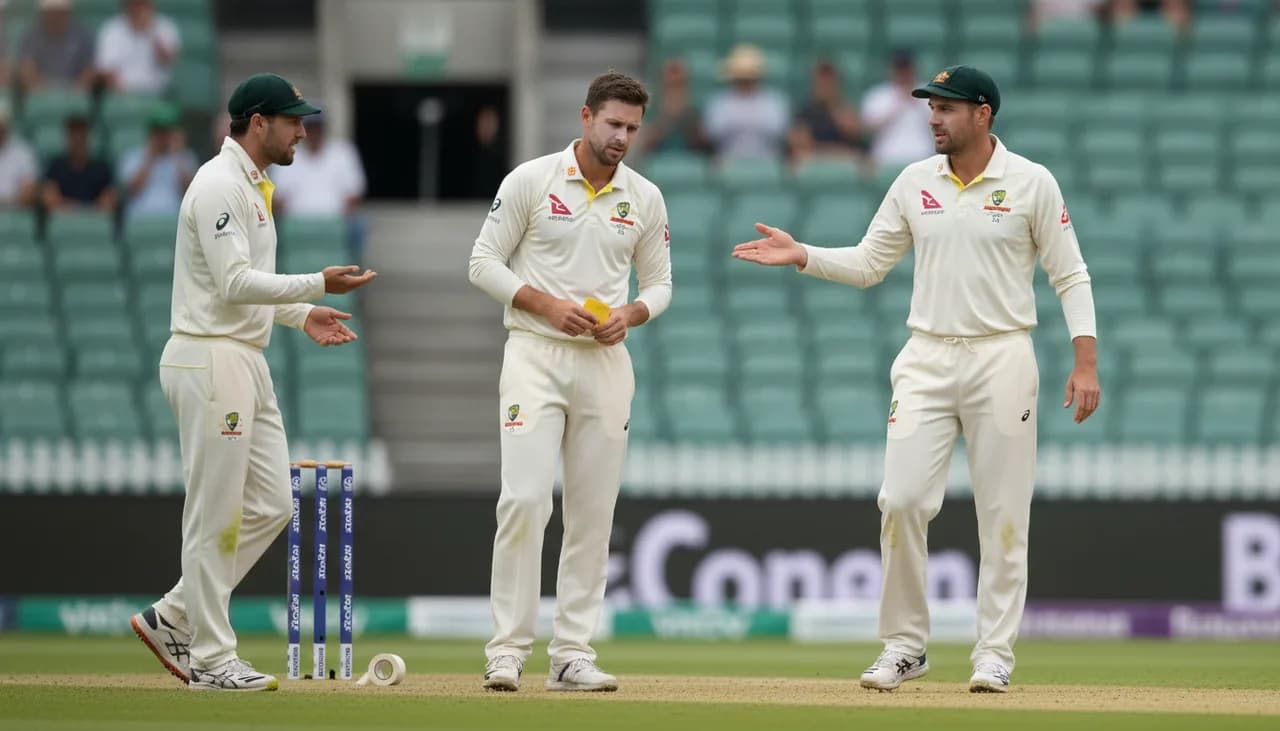

ADELAIDE — As the cricketing world turns its gaze to the Adelaide Oval for the second Ashes Test, a day-night affair under lights, one question looms large for England’s batters: how do you combat Mitchell Starc with the pink ball? The Australian left-arm quick has forged a formidable reputation as a day-night specialist, a predator in the twilight. To understand why, I spoke to former England fast bowler Steven Finn, who has faced Starc and now analyses the game with a keen eye for pace bowling craft.
The Pink Ball Paradox: Swing, Seam, and Starc's Arsenal
Finn immediately highlights the unique challenges of the pink Kookaburra. "The pink ball behaves differently to the red one, especially in that first session under lights," he explains. "It often retains its shine and hardness for longer, which can promote more pronounced conventional swing in the evening. But crucially, it also has a more pronounced seam. For a tall, 90mph-plus left-armer like Starc, that combination is a nightmare recipe for batters."
Starc’s mastery, Finn argues, isn’t just about the ball; it’s about how his specific skill set exploits its characteristics to the maximum. His assets are perfectly aligned for the conditions:
- Left-arm angle: Creates a natural angle across the right-hander, with the ball often shaping away. This forces batters to play at deliveries they might leave from a right-armer.
- Late, full swing: Starc’s ability to pitch the ball up and get it to swing late, often back into the right-hander from over the wicket, targets the stumps and the pads relentlessly.
- Height and bounce: Even his fuller deliveries can carry through at the ribcage, making driving hazardous and bringing the bat-pad catch into play.
- Aggressive mindset: He attacks the stumps and the front pad, banking on movement to turn good-length balls into wicket-taking deliveries.
The Art of the "Inswinging Yorker" in Day-Night Conditions
If there’s one delivery that symbolises Starc’s pink-ball threat, it’s the inswinging yorker to a right-handed batter. Finn breaks down why this ball is so potent under lights. "During the twilight period, when the ball starts to swing more, Starc’s confidence in that full, straight ball skyrockets," he says. "He knows that with the extra swing on offer, even if the batter is expecting length, that yorker can tail in late and beat the bat. It’s not just a surprise weapon; it’s a calculated strike ball when conditions are in his favour."
This was devastatingly evident in the previous Ashes day-night Test at Adelaide in 2021-22, where Starc’s first-ball dismissal of Rory Burns set the tone for the series. Finn notes that Starc’s record in day-night Tests – averaging under 20 with the ball before this match – is no accident. "He plans for these games. He knows his role is to strike early with the new ball, and then come back and break partnerships when it starts swinging again at night."
A Contrast in Styles: Starc vs. Anderson & Broad
Finn draws an interesting comparison with England’s legendary duo. "Jimmy Anderson is the greatest swing bowler we’ve ever seen, but his method with the red Dukes ball in England is about patience, building pressure, and finding the edge. Starc’s approach with the pink ball is more explosive. He’s looking for bowled and LBW by attacking the stumps with full, fast swing. It’s a higher-risk, higher-reward strategy that the pink ball and Australian conditions encourage." This attacking length, forcing batters to play consistently, is what creates so many chances.
The Mental Battle: Facing Starc in the Twilight Zone
Beyond technique, Finn emphasises the psychological warfare Starc wages. "As a batter walking out after tea, you know you’re in for your toughest 25 overs of the day. The lights are on, the atmosphere changes, and you see Starc marking out his long run. There’s an aura there now with the pink ball. He expects to get wickets, and batters know he expects to get wickets. That’s a powerful dynamic."
This mental edge is compounded by Starc’s experience. Having played more day-night Tests than any other bowler, he possesses an intimate knowledge of how the ball will behave at different stages across different Australian grounds. "He knows exactly when to push for an over of yorkers, or when to bang it in short to disrupt a batter’s footwork," Finn adds.
England's Blueprint for Survival and Success
So, what is the blueprint for England’s batters? Finn suggests a back-to-basics approach is critical. "It sounds simple, but you have to watch the ball harder than ever. With his angle and late swing, premeditation is fatal. The batters who have had success against him – like Joe Root and Ben Stokes – play him late, under their eyes. They trust their defence on off-stump and capitalise on any error in length." He also stresses the importance of scoring options to disrupt his rhythm.
Furthermore, Finn believes England’s own bowlers must learn from Starc’s template. "Our quicks have to be just as brave in pitching the ball up. The pink ball can do a bit off the seam early, but the real wicket-taking period is under lights. That requires courage to bowl full, even if you get driven. Starc shows that if you have the skills, the rewards are immense."
As the Adelaide Test unfolds, all eyes will be on Mitchell Starc with that pink Kookaburra in hand. In Steven Finn’s analysis, his dominance is a perfect storm of physical attributes, technical skill, and psychological advantage, all magnified by the unique conditions of day-night cricket. For England, navigating this specific threat may well define their fortunes in the match and their ability to claw back into the series. The twilight session awaits, and Starc, the modern-day pink-ball pioneer, will be ready to strike.