
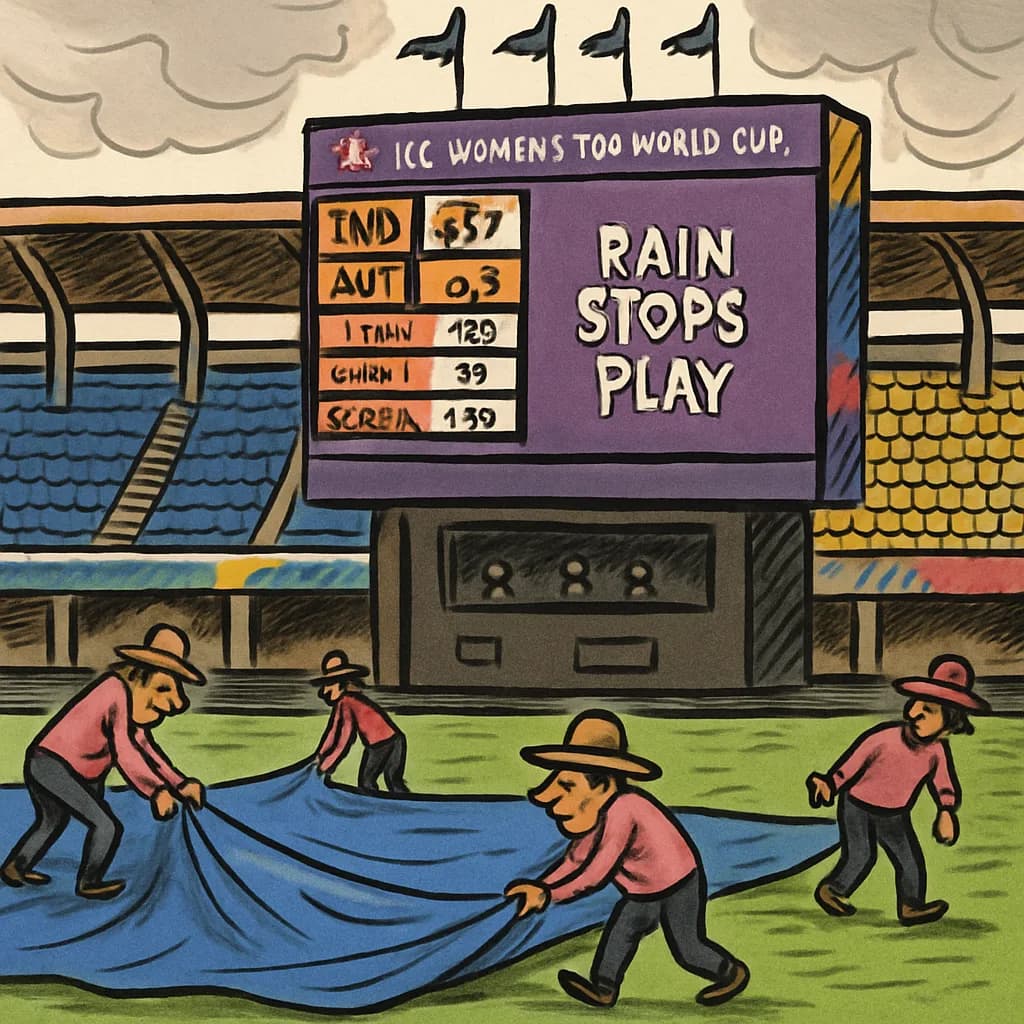
COLOMBO — The weather in Colombo has "ruined" the Women's ODI World Cup, according to former England spinner Alex Hartley, who has launched a scathing critique of the tournament's scheduling and the predictable rain interruptions that have plagued the competition in Sri Lanka.
A Tournament Dampened by Inevitability
Speaking on her popular podcast, The No Balls Cricket Podcast, Hartley expressed her frustration at the relentless downpours that have disrupted numerous high-profile matches. The ICC Women's Championship, which serves as the primary qualification pathway for the 2025 World Cup in India, has been severely impacted, with multiple games in Colombo abandoned without a ball bowled. "It feels like the whole tournament has been ruined by the weather in Colombo," Hartley stated bluntly.
The core of Hartley's argument lies in the predictability of the conditions. The tournament is being held during the heart of the South-West monsoon season, a period notoriously known for heavy and persistent rainfall in the region. "Everyone knows what the weather is like in Colombo in July," she said. "It was entirely foreseeable that this would happen."
The Real-World Consequences: Points and Progression
The impact of these washouts extends far beyond fan disappointment. With crucial World Cup qualification points on the line, the weather has created an uneven and arguably unfair playing field. Teams that have traveled to Colombo have seen potential victories turn into shared points, significantly affecting the standings in the ICC Women's Championship. Hartley emphasized the sporting injustice, pointing out that the weather has effectively become a key player in determining which nations make it to the global showpiece event.
The recent series between Sri Lanka and West Indies serves as a prime example. Of the three scheduled ODI matches, two were completely washed out, denying both teams critical opportunities to secure points. Similar fates have befallen other teams, leading to a logjam in the middle of the table where a single win or loss could dramatically alter a country's qualification chances.
Teams Most Affected by Colombo Washouts
The ramifications of the abandoned matches are not felt equally. Some teams have been disproportionately impacted:
- Sri Lanka: Lost home advantage and multiple chances to earn points on familiar turf.
- West Indies: A crucial away series was effectively nullified, halting their qualification momentum.
- Pakistan & New Zealand: Upcoming series in Colombo now hang in the balance, with their World Cup hopes at stake.
A Question of Scheduling and Responsibility
Hartley's criticism is primarily directed at the International Cricket Council (ICC) and its scheduling decisions. "You have to ask the question, why was it scheduled there at this time of year?" she questioned. "It feels like a massive oversight from the governing body." This sentiment is echoed by many fans and pundits who argue that the ICC's fixture calendar must account for global weather patterns to protect the integrity of its premier tournaments and qualification pathways.
The logistical and financial implications are also significant. Teams travel with large squads, coaching staff, and support personnel, incurring substantial costs. To have multiple days of a tour washed out represents a poor return on investment for national cricket boards and a lost opportunity to grow the women's game in key markets. Broadcasters are left with empty airtime, and fans who purchased tickets are left disappointed, potentially harming engagement in regions where cricket is fighting for attention.
Broader Context: A Pattern of Weather Woes
This is not an isolated incident for international cricket. The men's Asia Cup in 2023, also held in Sri Lanka, faced similar monsoon-related chaos, with the high-profile India vs. Pakistan group match and the final being severely affected by rain. Hartley's comments highlight a recurring theme in modern cricket scheduling, where commercial and political considerations sometimes appear to trump basic common sense and meteorological data.
The issue also raises questions about contingency planning. While cricket has introduced reserve days for major tournament finals, the group stages of qualifying events like the ICC Women's Championship have no such safety net. In an era of advanced weather forecasting, critics argue that the ICC could implement more flexible scheduling, such as allocating reserve days for series or utilizing venues in drier parts of the country, to mitigate these predictable disruptions.
The Way Forward for Women's Cricket
Despite the frustration, Hartley and other commentators hope this situation serves as a catalyst for change. The rapid growth and professionalization of women's cricket demand a more sophisticated and robust approach to scheduling. Protecting the product on the field is essential for the sport's commercial health and its ability to attract new fans. "The women's game deserves better than this," Hartley asserted.
Potential solutions being discussed within the cricket community include:
- Utilizing data analytics to create a "global weather map" for the ICC's future tour program.
- Prioritizing venues with adequate drainage and stadium cover during known rainy seasons.
- Investing in more ground-breaking water-removal technology to speed up the resumption of play after showers.
- Implementing a more flexible fixture list with built-in reserve days for critical qualifying matches.
In conclusion, while the weather itself is beyond anyone's control, the decision to host a vital segment of the World Cup qualification process in its path was not. Alex Hartley's blunt assessment that the predictable Colombo weather has "ruined" the tournament may seem harsh, but it underscores a critical failure in planning. As the women's game continues its ascent, the hope is that its governing bodies will demonstrate the same level of professionalism and foresight that its players display on the field, ensuring that future competitions are decided by skill and sportsmanship, not by the rain.