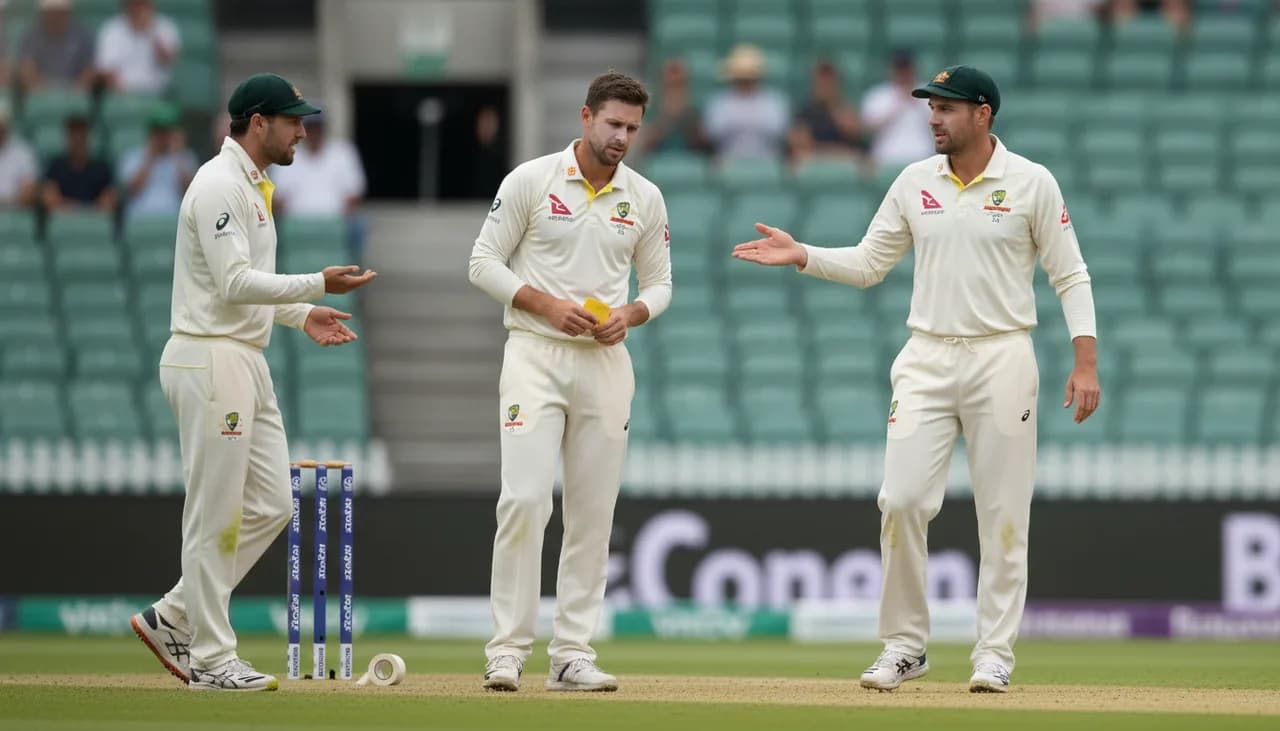
LONDON — In the latest significant shake-up of the England men's cricket setup following a dismal Ashes campaign, national selector Luke Wright has announced he will step down from his role. The decision marks the end of a two-year tenure for the former England all-rounder and represents a pivotal moment as the England and Wales Cricket Board (ECB) continues its post-Ashes review.
Wright’s departure, confirmed by the ECB on Monday, comes just weeks after the conclusion of a chastening 4-1 series defeat in Australia. It follows the earlier exits of Managing Director of Men's Cricket Rob Key and Head Coach Brendon McCullum, who both left their positions in the immediate aftermath of the tour. Wright’s role had already been under scrutiny, with his position effectively sidelined during the Ashes as selection was driven by Key and McCullum.
A Role in Evolution and the Ashes Fallout
Luke Wright was appointed as the first dedicated national selector in 2022, a role created to provide a focused eye on the county circuit and work alongside the captain and coach. His brief was to identify and track talent across all formats. However, the structure evolved, and increasing authority was vested in the captain-coach partnership of Ben Stokes and Brendon McCullum, particularly for the Test team. By the time of the Ashes, Wright’s influence on the red-ball squad was minimal.
The Ashes defeat prompted a wide-ranging internal review. While the aggressive 'Bazball' philosophy was largely praised, critical questions were asked about squad selection, particularly the balance of the attack and the handling of veteran bowlers. Key areas of scrutiny included:
- The omission of a specialist spinner for the first Test at the Gabba.
- The management of James Anderson and Stuart Broad's workloads.
- Perceived gaps in the batting order's resilience against high-quality pace.
In a statement, Wright acknowledged the shifting landscape, saying, "The role has evolved since I first took it on, and it’s now clear the direction the ECB wants to go is different to my original understanding. With that in mind, I feel it’s the right time to step away."
Wright's Tenure and Key Selections
Despite the recent red-ball struggles, Wright's two years were not without success. He played a significant part in building the white-ball squads that have maintained England's position as a formidable force in limited-overs cricket. His deep knowledge of the county game, honed from a long playing career and subsequent scouting, was instrumental in identifying several players who have transitioned to the international stage.
Notable successes during his tenure include the introduction of Harry Brook, who became a mainstay across formats, and the careful management of young fast bowler Josh Tongue, whose impactful debut came against Ireland ahead of the Ashes. Wright was also a strong advocate for the recall of veteran seamer Mark Wood, whose express pace was England's most potent weapon in Australia, earning him the Player of the Series award despite the overall result.
Reflecting on his time, Wright stated, "I’ve loved being part of the England setup. Seeing players I identified from county cricket go on to wear the Three Lions and succeed has been incredibly rewarding. I wish Rob, Ben, the new coach, and all the players every success for the future."
The Future of the Selection Process
Wright's exit raises immediate questions about the future model of selection for the England men's teams. The ECB has indicated it will now consider the best structure moving forward, with a strong possibility that the role may be absorbed into a broader head coach or director of cricket remit. The trend in world cricket has been moving away from independent selection panels and towards empowering the coach and captain with a supporting team of data analysts and scouts.
Interim ECB Performance Director, Mo Bobat, who will oversee the transition, said, "Luke has given excellent service to English cricket, both on and off the field. We thank him for his dedication and insight. We will now take some time to consider the most effective selection structure to support our men's teams moving forward."
This period of flux presents an opportunity for a potential reset. The new Head Coach, yet to be appointed, will likely have a major say in the preferred selection process. Key candidates for the coaching role, including former internationals like Paul Collingwood and external options such as Gary Kirsten, will have their own philosophies on how to bridge the gap between county cricket and the Test arena.
A Critical Summer Ahead
The timing of Wright's departure adds another layer of complexity to a crucial summer for English cricket. With a new coach to be installed and a major Test series against a formidable West Indies side on the horizon, stability is at a premium. The immediate selection tasks, such as finding a long-term replacement for the retired Stuart Broad and solidifying the top order, will now fall to a potentially new and untested hierarchy.
Furthermore, the focus will intensify on the pathway system. Critics have argued that the County Championship is not adequately preparing batsmen for the rigours of Test cricket, particularly against seam and swing. Whoever assumes responsibility for selection will need to work closely with county coaches to address these systemic issues, a task Wright was passionate about but found challenging within the constraints of his evolving role.
Conclusion: The End of an Era
Luke Wright's decision to stand down closes a chapter that began with the intention of creating a clear, dedicated link between domestic and international cricket. While the execution of that vision became muddled, his commitment and eye for talent are not in doubt. His exit is emblematic of the ongoing post-Ashes reckoning, a necessary if painful, process of evaluation and change.
As English cricket seeks to rebuild its Test fortunes while maintaining its white-ball excellence, the restructuring of the selection process will be a foundational decision. The hope within the ECB will be that from this period of transition emerges a more streamlined, decisive, and effective system—one capable of restoring England to the pinnacle of Test cricket and learning the hard lessons from a bruising Ashes defeat down under.
The search for Wright's successor, or perhaps the redefinition of his role, begins immediately, with the shadow of the Ashes and the bright lights of a new home summer providing the backdrop for this latest chapter of English cricket's evolution.